
FF7 Cloud Strife and Why He’s Gaming Royalty
Picture the scene. A spiky blonde silhouette, a sword nearly as tall as he is slung across his back, glowing blue eyes staring down a silver-haired nightmare. You don’t even need the name. You just know. That’s FF7 Cloud Strife. Few video game characters are this instantly recognizable. Fewer still have stayed relevant for nearly three decades.
Here’s the thing though – a lot of people know FF7 Cloud as an icon without really knowing his story. And oh boy, what a story. Beneath that cool, aloof exterior is one of the most psychologically complex, tragic, and ultimately human protagonists gaming has ever produced. His arc is a genuine mind-bender, packed with a twist that reshaped how we think about video game heroes.
So let me walk you through it all. Who Cloud really is, the shocking truth about his past, how he fights, and why the community still can’t stop talking about him. Fair warning – major spoilers ahead. Let’s get into it.
Who Is Cloud Strife?
Let’s start with the basics before we get to the wild stuff. On the surface, Cloud is the main protagonist of Final Fantasy VII, and he presents himself as a former First Class SOLDIER – Shinra’s elite, mako-enhanced super-soldiers. After leaving Shinra, he works as a mercenary for hire in Midgar.
At the start of the story, his childhood friend Tifa Lockhart recruits him for a job with Avalanche, an eco-terrorist resistance group fighting Shinra’s environmental destruction. Together they sabotage a mako reactor, kicking off a journey that spirals into a fight to save the entire planet. Along the way, they chase the villainous ex-SOLDIER Sephiroth and uncover the truth about the dangerous Black Materia.
Cloud was born in the mountain village of Nibelheim, where he grew up near Tifa, who was a year younger. His mother, Claudia Strife, raised him alone after his father died when Cloud was very young. Excluded and bullied by the other village kids, Cloud grew up isolated and close to his caring mother. That childhood loneliness planted seeds that would define his entire character.
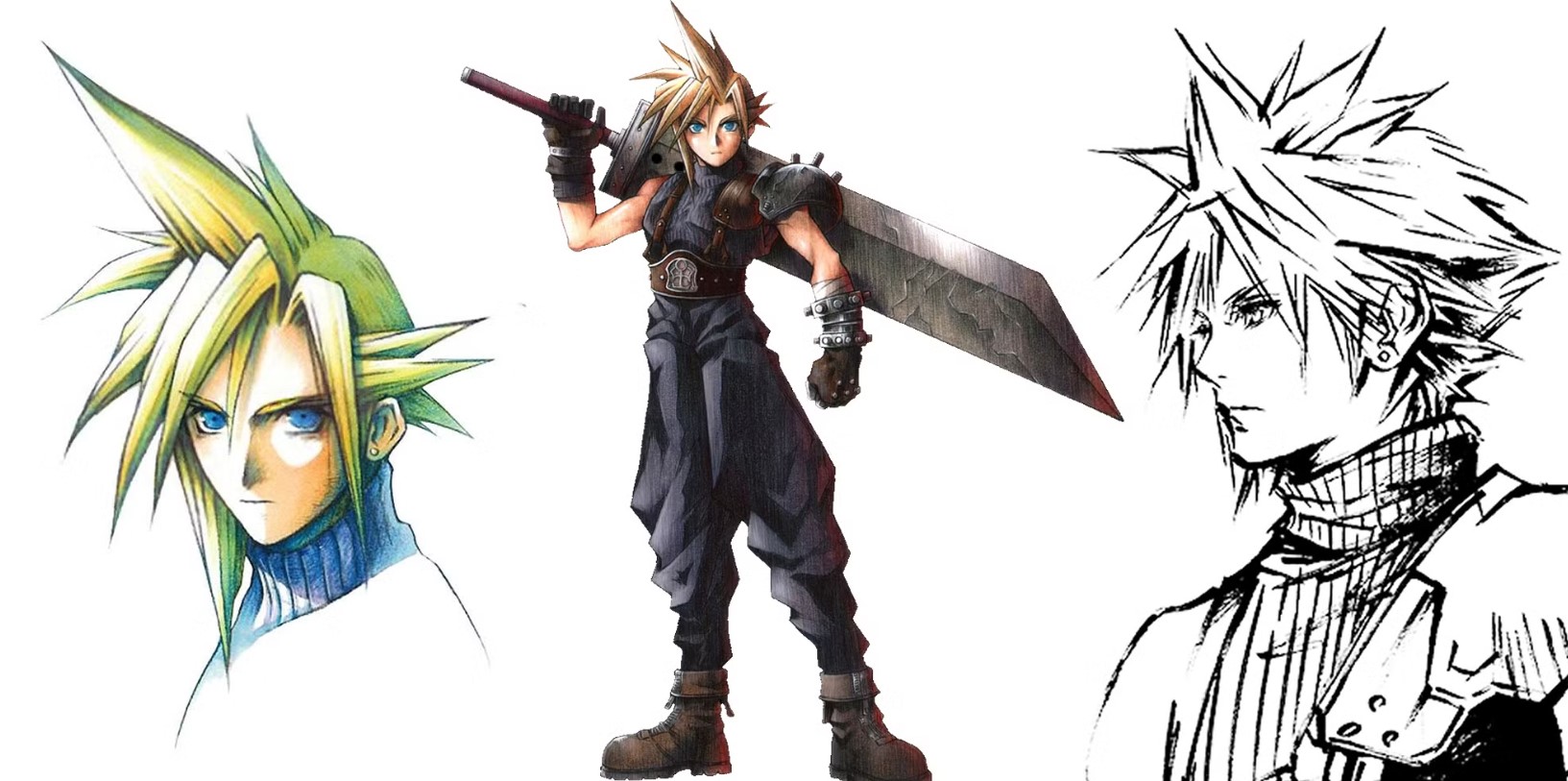
Here’s the key to understanding him. The name “Cloud Strife” itself perfectly captures his conflicted inner world:
- Cloud – hazy, uncertain, hard to pin down, much like his fractured sense of self.
- Strife – the constant inner turmoil and struggle that defines his journey.
- A hero unsure of himself – for all his bravado, he often looks to others for direction.
That last point is crucial. As TV Tropes fans note, for all his physical prowess and cool-guy attitude, Cloud remains deeply unsure of himself, lacking a clear path of his own. His famous line – worry less about the planet and more about the next five seconds – masks a man who genuinely doesn’t know who he is. And that’s not just characterization. It’s literally the plot.
The FF7 Cloud Twist That Shattered Players
Okay, here’s where Final Fantasy VII cements its legendary status, and where FF7 Cloud becomes one of the most fascinating characters in gaming. The big twist. If you’ve never experienced it, brace yourself.
Cloud is not who he thinks he is.
The whole “First Class SOLDIER” identity he presents? It’s not real. The memories he has of his past are, in large part, not his own. Final Fantasy VII’s central mystery revolves around Cloud’s jumbled, suppressed memories and his true identity – and unraveling it is one of the most emotionally devastating reveals in the medium.
Here’s the truth, pieced together across the story. Cloud actually failed the SOLDIER entry exam and became a regular Shinra infantryman – a grunt, not an elite. His real connection to the events he “remembers” came through his friendship with a genuine First Class SOLDIER named Zack Fair. During the Nibelheim Incident, when Sephiroth went mad and destroyed Cloud’s hometown, both Cloud and Zack were captured by the sinister Professor Hojo and injected with Jenova cells in an experiment to turn them into Sephiroth clones.
The experiment broke Cloud. The combination of prolonged mako exposure, Jenova’s influence, and the trauma of everything he witnessed left him catatonic. Then came the final blow – after the pair escaped, Zack was gunned down by Shinra forces while protecting the unconscious Cloud, dying in his arms. In his last breath, Zack entrusted Cloud with the iconic Buster Sword and his legacy.
And this is where it gets heartbreaking. Cloud’s shattered psyche, influenced by the Jenova cells, absorbed pieces of Zack’s persona and memories. When he later reunited with Tifa, the Jenova cells read her memories to construct a new identity – a Cloud built from his own dreams, Zack’s heroism, and Tifa’s recollections. The confident SOLDIER “Cloud” was a fabrication, a coping mechanism stitched together from trauma and borrowed memories.
Untangling Identity: The Heart of the Story
Let me sit with this a moment, because it’s what makes FF7 Cloud so special. This isn’t just a plot gimmick. It’s a profound exploration of identity, trauma, and self-worth.
The community has long recognized this as the emotional core of the entire game. As one fan analysis beautifully put it, the central theme is identity – Cloud’s confusion with Zack, his idolization of Sephiroth that shatters, his status as a failed clone, and how, in the end, none of it defines him. Cloud is just Cloud, whoever he chooses to be.
That’s the payoff. Cloud’s journey isn’t really about defeating Sephiroth. It’s about a broken young man reassembling his true self, coming to terms with who he actually is versus who he pretended to be, and finding the strength to define his own future rather than living as a copy of someone else. When he finally accepts his real, humbler past – the failed grunt who was there at Nibelheim, just not as a hero – he becomes genuinely strong, not because of Jenova or borrowed memories, but because he’s finally himself.
It’s a stunningly mature theme for a 1997 video game, and it’s a big reason FF7 Cloud endures. He’s not a power fantasy. He’s a portrait of someone rebuilding themselves from the wreckage of trauma. That resonates deeply, which is why players form such lasting attachments to him.
How Does FF7 Cloud Fight?
Enough psychology – let’s talk about the swordplay, because Cloud is as fun to control as he is fascinating to analyze. His combat has evolved beautifully across the games.
His signature weapon is, of course, the Buster Sword – a massive broadsword nearly as big as his body, capable of slicing through steel and concrete. It’s one of the most iconic weapons in all of gaming, instantly associated with him. He later wields the Fusion Swords in Advent Children, a set of six blades that connect into one.
In the original 1997 game, Cloud was a balanced, powerful physical attacker. But the Remake trilogy transformed his combat into something far more dynamic. Here’s how he plays in the modern games:
- Operator Mode – balanced attack and defense with good mobility, ideal for staying nimble.
- Punisher Mode – heavier, stronger attacks focused on single targets, with the ability to counter melee strikes, but at the cost of movement and ranged defense.
- Mode switching on the fly – the core of his playstyle, adapting to different threats mid-battle.
- Synergy skills and abilities – team-up combos with party members added in Remake and Rebirth.
In Final Fantasy VII Rebirth, his moveset expanded further, adding projectile attacks and more robust aerial combat. He can now fire ranged attacks by dodging and immediately attacking in Operator Mode, and his synergy abilities let him link devastating combos with the growing cast of party members. He’s a versatile, satisfying character to master – a swordsman who rewards players who learn his rhythms.
There’s even a cute nod to the game’s title woven into his stats: in the original, Cloud leveling up to Level 7 in the first battle is one of many playful allusions to Final Fantasy VII’s number. Little touches like that show how lovingly crafted his character is.
The Remake Trilogy: A New Journey for Cloud
Here’s something the community is buzzing about right now. The Remake trilogy – Final Fantasy VII Remake (2020) and Final Fantasy VII Rebirth (2024) – isn’t just a straight retelling. It’s doing fascinating new things with Cloud’s story.
In the original, Cloud starts as a blank slate and gradually comes to terms with his past, breaking free from Sephiroth’s control to define his own future. But the Remake version finds him in a subtly different position. His interactions with Sephiroth are far more nuanced and two-sided, with the villain appearing with an unsettling self-awareness – almost as if he’s preparing Cloud for trials ahead rather than simply trying to destroy him.
The Remake series even explicitly toys with the established canon, to the point where mysterious “Whispers” appear to try and force the story back onto its original track. It’s a bold, fourth-wall-bending approach from director Tetsuya Nomura that keeps even longtime fans guessing. Where the original told a fixed tale, the Remake trilogy dangles the possibility that things could unfold differently this time.
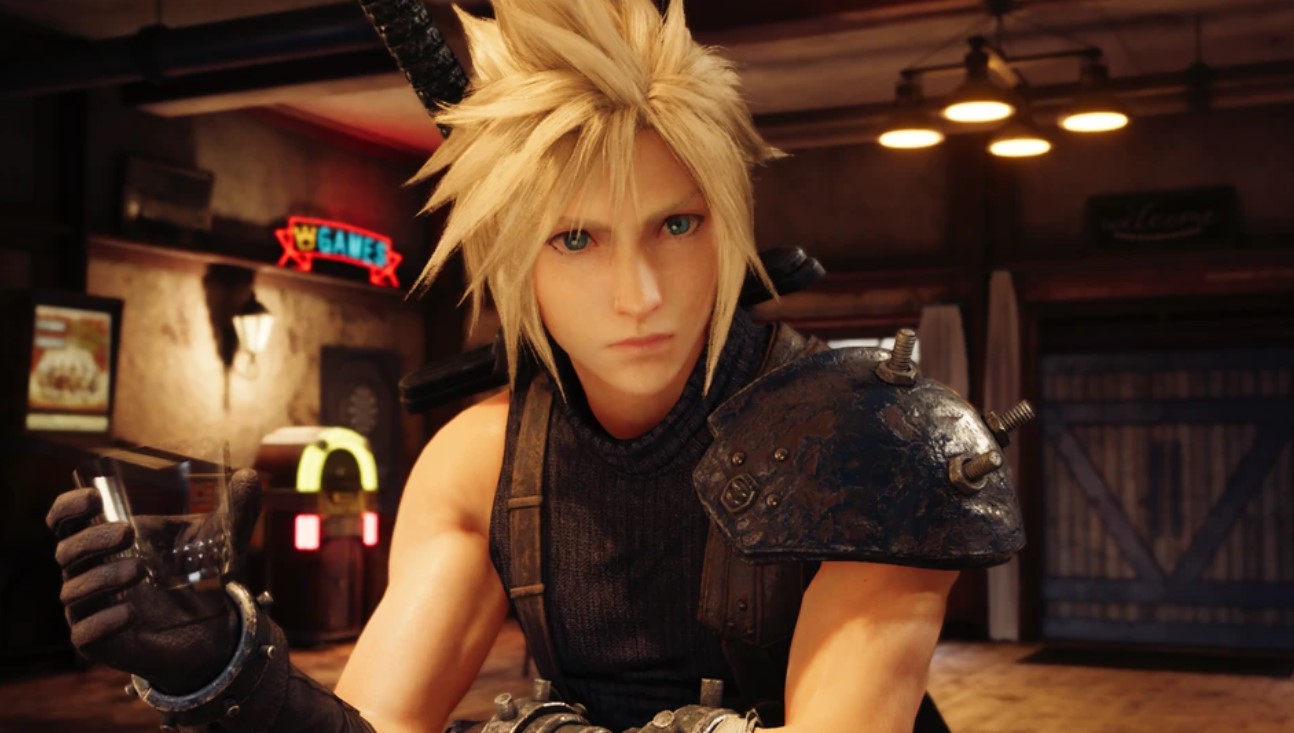
This has massive implications for Cloud specifically. Fans have noted moments in Rebirth where the seams of his fabricated persona show – his cheerful, energetic “SOLDIER” performance slipping to reveal the real, quieter Cloud underneath. When Sephiroth mentions Nibelheim, for instance, the false persona momentarily cracks, and the genuine Cloud reacts to hearing his true hometown named. It’s masterful storytelling that rewards attentive players.
The community is intensely eager to see how the trilogy’s final chapter handles Cloud’s arc, especially with plot threads like Zack seemingly surviving in an alternate timeline. Whether Square Enix can deliver the same emotional payoff as the original while forging a new path is the big question hanging over the whole trilogy.
Why Cloud Endures
So let’s step back and ask – why does FF7 Cloud remain gaming royalty after all these years? What makes him so beloved?
Part of it is pure iconography. The spiky blonde hair, the glowing mako eyes, the enormous Buster Sword – he has one of the most recognizable designs in all of gaming. He’s been immortalized in countless figures, cameos, crossovers like Super Smash Bros., and spin-offs. His look alone is legendary.
But the deeper reason is his humanity. Cloud isn’t a flawless hero. He’s awkward, uncertain, traumatized, and flawed – and that makes him relatable in a way few protagonists are. His struggle to figure out who he is speaks to anyone who’s ever felt lost or unsure of themselves. Underneath the cool exterior is someone genuinely fighting to become whole, and rooting for him feels personal.
Add in his central role in one of the most acclaimed JRPG stories ever told, his complex relationships with Tifa, Aerith, Zack, and Sephiroth, and a combat style that’s genuinely fun to play, and you’ve got a character who’s earned every bit of his legendary status. He’s the courageously flawed hero at the heart of a masterpiece, and the Remake trilogy is introducing him to a whole new generation. Cloud isn’t going anywhere.
FAQ
Who is FF7 Cloud?
Cloud Strife is the main protagonist of Final Fantasy VII, a mercenary and former Shinra infantryman who wields the iconic Buster Sword and battles the villain Sephiroth.
Is Cloud really a First Class SOLDIER?
No. That’s the game’s big twist. Cloud failed the SOLDIER exam and was a regular grunt. His SOLDIER identity is a fabrication built from trauma and Zack’s memories.
Who is Zack Fair to Cloud?
Zack was a real First Class SOLDIER and Cloud’s friend, who died protecting him and passed on the Buster Sword. Cloud unconsciously absorbed parts of Zack’s persona.
What’s Cloud’s signature weapon?
The Buster Sword, a massive broadsword nearly as tall as he is. He later wields the six-piece Fusion Swords in Advent Children.
How does Cloud fight in the Remake games?
He switches between Operator Mode for mobility and balance and Punisher Mode for heavy attacks and counters, plus synergy combos with party members.
Why are Cloud’s memories fake?
Jenova cells and mako exposure broke his psyche after the Nibelheim Incident, causing him to build a false identity from his own dreams and Zack’s and Tifa’s memories.
What makes Cloud such an iconic character?
His unforgettable design, his deeply human struggle with identity and trauma, and his central role in one of gaming’s most beloved stories.
Wrapping It Up
So there’s your deep look at FF7 Cloud, one of gaming’s most enduring and complex heroes. Behind the spiky hair and oversized sword is a genuinely tragic, beautifully human story – a young man rebuilding his shattered identity, coming to terms with a past far humbler than the heroic fantasy he constructed, and ultimately finding strength in simply being himself.
My honest take? If you’ve only ever known Cloud as an icon, dig into his actual story. Whether through the original Final Fantasy VII or the stunning Remake trilogy, his arc rewards you with one of the most emotionally resonant journeys in the medium. The identity twist alone is worth experiencing, and it hits even harder when you understand the trauma underpinning it.
Cloud endures because he’s more than a cool design – he’s a mirror for anyone who’s ever struggled to figure out who they are. And with the Remake trilogy still unfolding, there’s never been a better time to fall for the legend of Cloud Strife all over again. Now go relive that story.
P.S. If this deep-dive helped you appreciate Cloud even more, please support us by sharing the post across your social media and adding it to your bookmarks so it’s easy to find later. Every share genuinely helps our team keep content like this coming. And if you’re seeking creative or commercial collaboration, feel free to write to the Lizet Manski team directly – we’d love to hear from you.