
Rune Factory 2 vs Stardew Valley: The Cozy Showdown
Picture two farmers standing in their fields at sunrise. One leans on a watering can, planning a peaceful day of crops, fishing, and chatting with the neighbors. The other straps a sword to their back, waters a few turnips, then charges into a monster-filled dungeon before dinner. That, in a nutshell, is the Rune Factory 2 vs Stardew Valley divide. Both are farming sims. But they scratch very different itches.
Many players wonder which one to sink dozens of hours into, and the answer genuinely depends on what you want from the genre. Do you crave deep farming and cozy town life, or a fantasy action-RPG with combat, dungeons, and monster taming bolted onto your farm? Pick based on the wrong assumption, and you might bounce off a game that’s actually great for someone with different tastes. Understanding the real differences matters.
So let me break down the Rune Factory 2 vs Stardew Valley comparison properly – their farming, combat, story, characters, romance, and overall feel – using what the community actually says. By the end, you’ll know exactly which one deserves your time. Let’s dig in.
What Are These Two Games, Anyway?
Let’s set the stage first, because these games come from a shared lineage but went in different directions. Understanding their DNA explains everything about how they play.
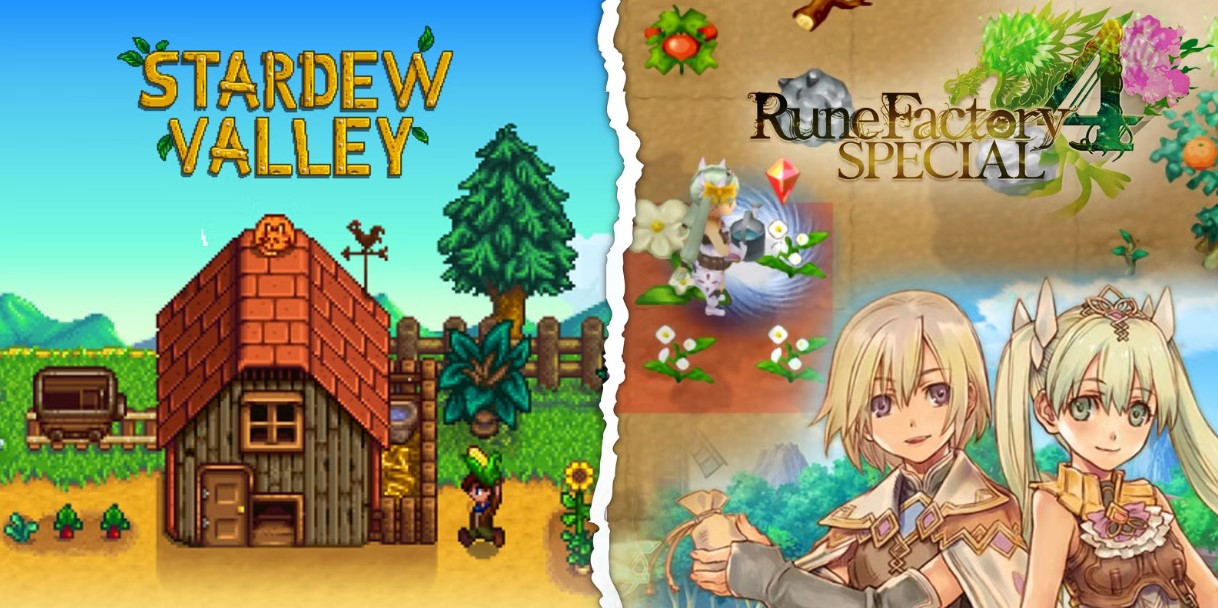
Stardew Valley (2016) is the indie darling created almost single-handedly by Eric Barone (ConcernedApe). It’s a farming sim where you inherit a run-down farm and rebuild it, growing crops, raising animals, fishing, mining, befriending townsfolk, and slowly restoring the community. It has combat in its mines, but that’s a side activity – the heart is peaceful farm life. It was directly inspired by the Harvest Moon series.
Rune Factory 2: A Fantasy Harvest Moon (2008, Nintendo DS) is a spinoff of Harvest Moon/Story of Seasons – which is itself Stardew Valley’s biggest inspiration. So they’re cousins. Rune Factory took the Harvest Moon formula and, as one writer put it, dared to ask “but what if I could stab things too?” The result is a fantasy action-RPG farming hybrid with dungeon crawling, monster taming, and combat woven into the farm-life loop.
Here’s the core identity of each:
- Stardew Valley – a deep, cozy farming sim with light combat and rich town life.
- Rune Factory 2 – a fantasy action-RPG with farming, dungeons, and monster taming.
- Shared roots – both descend from Harvest Moon/Story of Seasons.
- Different emphasis – Stardew leans farming and community; RF2 leans combat and adventure.
The community sums it up neatly: Rune Factory is a true action-RPG farming sim hybrid, while Stardew Valley is a farming sim where you can do some combat. That distinction – emphasis – is the single most important thing to grasp in this whole comparison. Neither does everything best; they specialize.
Rune Factory 2 vs Stardew Valley: The Farming Face-Off
Let’s start with the obvious battleground – the farming itself, since it’s the foundation of both games. And here, there’s a clear community consensus worth knowing.
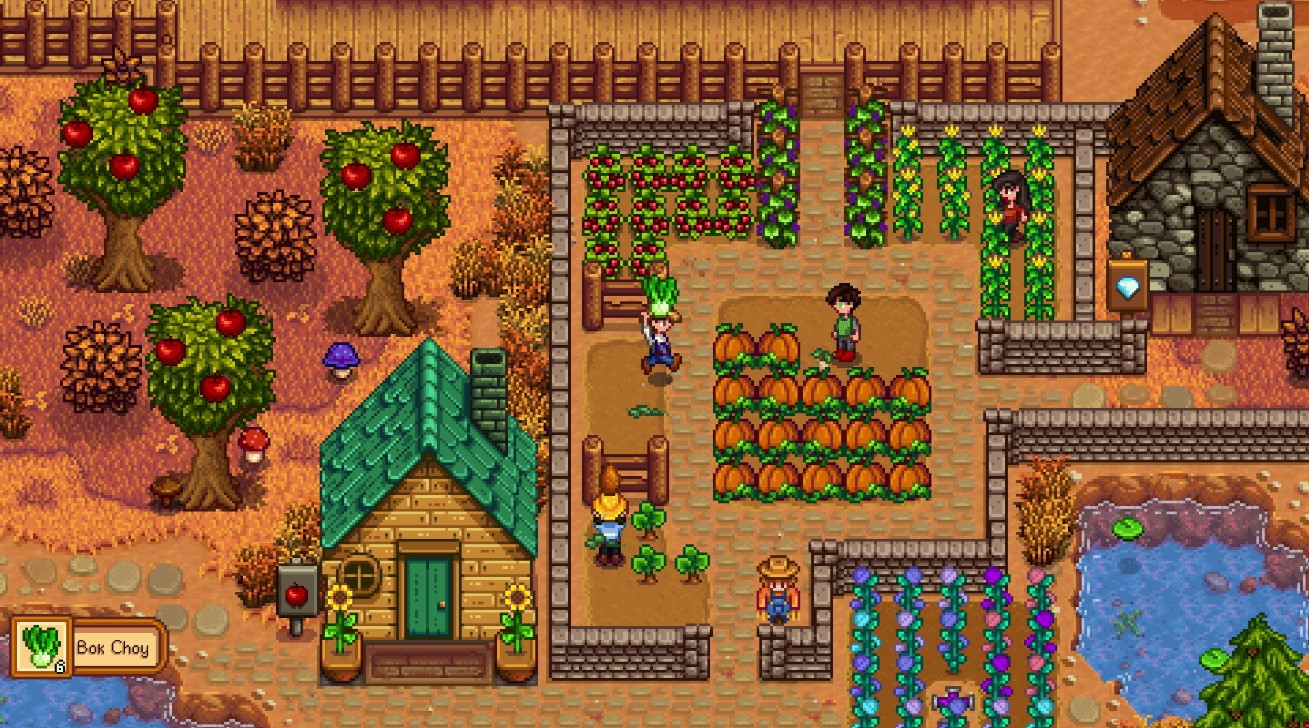
Stardew Valley wins on farming depth, and it’s not especially close. The farming is significantly more in-depth in Stardew than in Rune Factory, with far more customization for how you build and decorate your farm. You get sprinklers, crop layouts, artisan goods, greenhouses, and endless optimization potential. As one player noted, you can justify a full day of farming in Stardew, whereas in Rune Factory the farm can feel like a means to an end.
Rune Factory 2’s farming, by contrast, is simpler and more functional. Here’s how they stack up:
- Stardew Valley – deep crop systems, animal husbandry, artisan production, heavy farm customization and decoration.
- Rune Factory 2 – functional farming that levels up your skills, but less depth and customization.
- Skill progression – RF2 attaches levels to every action, so farming makes you stronger for combat.
- Farm feel – Stardew’s farm is a creative playground; RF2’s is more of a supply base.
That RF2 skill system is a genuinely interesting wrinkle, though. In Rune Factory, every action you can do has a level attached, and leveling those skills benefits you both in and out of combat. So you can “grind” just from farming and Harvest Moon-like activities to make dungeons easier. Your farming literally powers up your adventuring, which is a neat integration Stardew doesn’t have.
Still, if farming is your primary love – the planning, the layouts, the satisfying optimization – Stardew Valley is the clear winner. It’s one of the deepest, most rewarding farming experiences in all of gaming. Rune Factory 2’s farming is enjoyable but plays second fiddle to its combat and adventure.
Combat and Adventure: Where Rune Factory 2 Shines
Now let’s flip the field to Rune Factory 2’s home turf. Because if farming is Stardew’s strength, combat and dungeon-crawling are unquestionably Rune Factory’s. This is the biggest gameplay difference between the two.
Rune Factory 2 features full action-RPG combat with weapon crafting, magic, seasonal dungeons, and challenging boss battles. Each dungeon has an associated boss fight featuring significantly tougher combat against a larger foe. You forge armor and weapons, learn skills, and genuinely progress as an adventurer. The community is unanimous that Rune Factory’s battle system is far stronger and deeper than Stardew’s.
Then there’s the standout Rune Factory feature: monster taming. Here’s what sets it apart:
- Monster taming – befriend and recruit wild monsters to fight alongside you or help with farm chores.
- Weapon and armor crafting – a deep forging system for gear, absent in Stardew.
- Seasonal dungeons – themed dungeons with puzzles, monsters, and bosses to conquer.
- Skill-based RPG progression – every action levels up, deepening the RPG systems.
Stardew Valley does have combat, to be fair – as much as you want in its mines and the Skull Cavern. But the community describes it as two-dimensional and a means to an end. Enemies mostly approach in straight lines, your equipment is limited to weapons and a couple of rings, and the skill depth is minimal compared to Rune Factory. It’s fun, but it’s a side dish, not the main course.
So if you want a farming game where you can genuinely go on RPG adventures – crafting gear, taming a monster army, and battling through dungeons – Rune Factory 2 delivers something Stardew simply doesn’t try to match. It’s “Harvest Moon with swords,” and that fantasy hook is its whole identity.
Story, Romance, and That Wild Rival System
Here’s where things get really interesting, because Rune Factory 2 has some genuinely unique narrative and romance mechanics that set it apart from Stardew’s approach. Let me break down both.
Rune Factory 2’s biggest structural twist is its two-generation story. You start as Kyle, an amnesiac who wanders into town, farms, marries, and has a child. Then – surprisingly – the game shifts perspective entirely to your kid (Aaron or Aria), who becomes the new protagonist and sets out to solve the mystery of their father’s disappearance. This two-generation structure adds narrative depth rarely seen in farming RPGs, and it’s the game’s main draw. Stardew has a slower-paced, more ambient story by comparison.
Both games feature romance and marriage, but they handle it very differently:
- Stardew Valley – court any of twelve bachelors/bachelorettes at your own pace, no time pressure, can have kids.
- Rune Factory 2 – marriage is mandatory in gen one to progress the story and produce your heir.
- The rival marriage system – RF2’s most infamous mechanic, absent from Stardew.
- Character depth – the community often favors Stardew’s townsfolk for feeling more like real people.
That rival marriage system is genuinely wild and worth highlighting. Rune Factory 2 is the only game in the series with it: if you don’t marry your chosen partner fast enough, another single villager can swoop in and marry them instead. You can even crash a wedding at the last second to steal a bride, or propose to another woman while already married. It’s cheeky, chaotic, and totally unlike Stardew’s relaxed, pressure-free romance. Some players love the stakes; others find it stressful.
On character writing, the community leans toward Stardew. Many players who love Rune Factory still admit Stardew’s characters have more personality and feel more like real people, whereas Rune Factory’s cast can lean into JRPG stereotypes (charming as that fantasy flavor is, with its elves and sorceresses). Both have heart, but Stardew’s townsfolk tend to win the depth debate.
Art Style and Overall Feel
Let me touch on presentation and vibe, because this genuinely affects which game clicks for you. And there’s real community debate here worth airing honestly.
Art style is surprisingly divisive. Some players find Rune Factory’s anime-inspired art far more appealing and colorful than Stardew’s retro pixel look, arguing RF’s art is “far and away better.” Others find Rune Factory’s anime style off-putting and prefer Stardew’s neutral, timeless pixel aesthetic – in fact, some theorize that Stardew’s more universally palatable art is part of why it became vastly more popular despite Rune Factory’s deeper mechanics. It’s genuinely subjective, so trust your own eye.
The overall feel differs too:
- Stardew Valley – relaxed, cozy, meditative; play at your own pace with no pressure.
- Rune Factory 2 – busier, more structured, with story goals and combat urgency.
- Modding – Stardew has a massive mod scene; Rune Factory 2 does not.
- Accessibility – Stardew is PC-native with easy controls; RF2 is an older DS title.
That modding point is a big practical factor. Stardew Valley has an enormous, thriving mod community that can reshape and extend the game almost infinitely, adding content, characters, and quality-of-life tweaks. Rune Factory 2, as an older Nintendo DS game, has nothing comparable. If longevity and customization matter to you, that’s a significant point in Stardew’s favor.
One honest note on Rune Factory 2 specifically: the community considers it one of the weaker entries in its own series, with RF3 and RF4 widely regarded as the franchise’s high points. So while RF2 has that unique two-generation hook, players new to Rune Factory sometimes get pointed toward RF4 instead. Keep that in mind if you’re choosing your first fantasy farmer.
So Which Should You Play?
Let me help you make the call, because the “right” answer genuinely depends on you. This isn’t a case of one game being objectively better – they’re built for different tastes.
Here’s the honest breakdown of who each game suits:
Choose Stardew Valley if you want deep, rewarding farming, cozy town life, rich character relationships, relaxed pace, endless mod support, and the definitive modern farming-sim experience. It’s the pick for players who love the peaceful life-sim fantasy and want to lose themselves in optimizing a beautiful farm.
Choose Rune Factory 2 if you want fantasy action-RPG combat, dungeon crawling, monster taming, weapon crafting, and a unique two-generation story with that infamous rival marriage system. It’s the pick for players who want their farming with a hearty side of adventure and swordplay.
The community’s wisdom is refreshingly balanced: you can play both and enjoy them for what they are, since they focus on different things. Neither is definitively better – Stardew wins on farming and character depth, Rune Factory wins on combat and RPG systems. Many fans happily own and love both. If you can only pick one and you’re new to the genre, Stardew Valley is the safer, more accessible, more universally beloved starting point.
But if the “Harvest Moon with swords” fantasy excites you, Rune Factory delivers something special.
FAQ
Is Rune Factory 2 or Stardew Valley better?
Neither is definitively better. Stardew wins on farming depth and characters, while Rune Factory 2 wins on combat, dungeons, and RPG systems. It depends on your taste.
What’s the main difference between them?
Emphasis. Rune Factory 2 is an action-RPG farming hybrid with combat and dungeons, while Stardew Valley is a farming sim with light combat and deep town life.
Which has better farming?
Stardew Valley, clearly. Its farming is far deeper, with more crops, customization, and farm decoration than Rune Factory 2’s simpler, more functional system.
Which has better combat?
Rune Factory 2. It features full action-RPG combat, weapon crafting, monster taming, and boss battles, whereas Stardew’s combat is a simpler side activity.
What’s Rune Factory 2’s two-generation system?
You start as Kyle, marry, and have a child, then the game shifts to controlling your kid, who becomes the new protagonist to solve the main story.
Does Stardew Valley have mods?
Yes, a huge mod community that adds content and customization. Rune Factory 2, as an older DS game, has no comparable modding scene.
Should I start with Rune Factory 2 or another entry?
RF2 is unique but considered a weaker series entry. Newcomers to Rune Factory are often pointed toward RF4, widely regarded as the franchise’s best.
Wrapping It Up
So there’s your complete breakdown of Rune Factory 2 vs Stardew Valley. These two farming sims share ancestry but split in emphasis: Stardew is the cozy, deep farming-and-community king with endless mod support, while Rune Factory 2 is the fantasy action-RPG farmer with combat, dungeons, monster taming, and that wild two-generation story and rival marriage system. Both are genuinely good – they just serve different cravings.
If you want relaxed, meditative farm life with rich characters and deep optimization, go Stardew Valley. If you want your farming spiced with swordplay, dungeon-crawling, and RPG progression, Rune Factory 2 (or RF4 as a stronger series entry) is calling. And honestly? If you love the genre, there’s no shame in playing both – they complement each other beautifully, one for cozy days and one for adventurous ones.
At the end of the day, the “winner” is whichever fantasy speaks to you: the peaceful farmer or the sword-swinging one. Both offer dozens of joyful hours. Now grab your watering can – or your watering can and a sword – and get planting. Your farm awaits.
P.S. Here’s your perfectly-timed harvest of thanks: if this comparison helped you sow the seeds of a decision, plant it across your social feeds so fellow farmers can weigh their options too, and pin it to your bookmarks like a favorite crop you’ll want to come back and harvest before your next planting season. Every share is basically a golden watering can that keeps our team’s guides growing strong. And if you’re seeking creative or commercial collaboration, the Lizet Manski team is one message away – reach out directly and let’s cultivate something great together.