
What Does Asuka in Tekken 8 Actually Do?
Every fighting game has one character who plays the opponent instead of the game. You know the type. You throw out a perfectly reasonable string, and somewhere in the middle of it your own limbs get grabbed, redirected, and used against you like you’re in a martial arts movie where you’ve been cast as the guy who gets thrown through a table. That’s Asuka in Tekken 8, the Kazama girl from Osaka. And she’s been quietly at the center of one of the longest-running balance arguments in the game.
Strip away the reputation and there’s one sentence at the core of this character: she wins by making you regret pressing buttons.
The formal term the community uses is turn stealing. You’re the one with the advantage, you’re the one applying pressure, and she has a stack of tools designed to yank that turn out of your hands mid-sequence. Reversals. Sabakis. A power crush. A low-crushing counter-hit launcher. An 11-frame kick and a jab string that punishes anyone who gets greedy.
The strategy that grows out of that toolkit is almost psychological. Make the opponent hesitate. Then, the moment they start second-guessing whether it’s safe to attack, hit them with a genuinely nasty 50/50 built around her knockdown low and a menu of mid options.
Here’s the thing, though. She isn’t a stat monster propping that up. Her fundamentals are, frankly, bad – community frame data resources describe her as having the worst jab in the game, some of the slower low pokes on the roster, and mediocre tracking that makes her vulnerable to sidestepping. She has no natural combo follow-up off her standard mid poke.
| Strengths | Weaknesses |
|---|---|
| Elite turn-stealing options | Weak tracking, easy to sidestep |
| Deep counter-hit game | Worst jab in the game |
| Safe mid launcher that catches crouchers | Slow lows, prone to counter-hits while poking |
| Strong reversals and sabakis | Weak early punishment |
| Low execution demand | No natural follow-up off df+1 |
Look at that table and you can already see why the community fights about her. She’s not weak. She’s not strong. She’s lopsided, and lopsided characters are the ones people argue about forever.
Stage One: Your First Ten Hours
Good news for anyone intimidated by Tekken’s reputation. She’s genuinely one of the more approachable characters on the roster. One stance, no complicated cancels, no execution wall. Guides consistently flag her as beginner-friendly, and if you’ve played other 3D fighters like Virtua Fighter or Dead or Alive, the defensive-parry rhythm will feel familiar.
At this stage, ignore ninety percent of the movelist. You need maybe six things.
- 1+2 is your safe mid launcher, and it’s the single most important button she has. It’s safe on block, it launches crouching opponents, and it’s the mid half of her signature mixup. Nothing else in the early kit does as much work.
- d+1+2 is the low half. A knockdown low that opens up her whole approach game. Pair it with 1+2 and you have the coin flip that carries her at every level of play.
- df+2 is the safe generic launcher – hard to punish, useful when you just need something to come out.
- db+3 is a ranged low that leaves them crouching with pushback. Deeply annoying, especially at the wall, where the pushback disappears and you can bully with it.
- d+3+4 is a 14-frame counter-hit launcher that crushes lows almost immediately. Think of it as a safe hopkick. This is your panic button when someone’s smothering you.
- b+3 is a strong keepout mid with high and low crush properties. Chuck it out when someone’s rushing in too eagerly.
That’s it. That’s a functional character. You’ll get to green ranks with those six and a combo you found on YouTube.
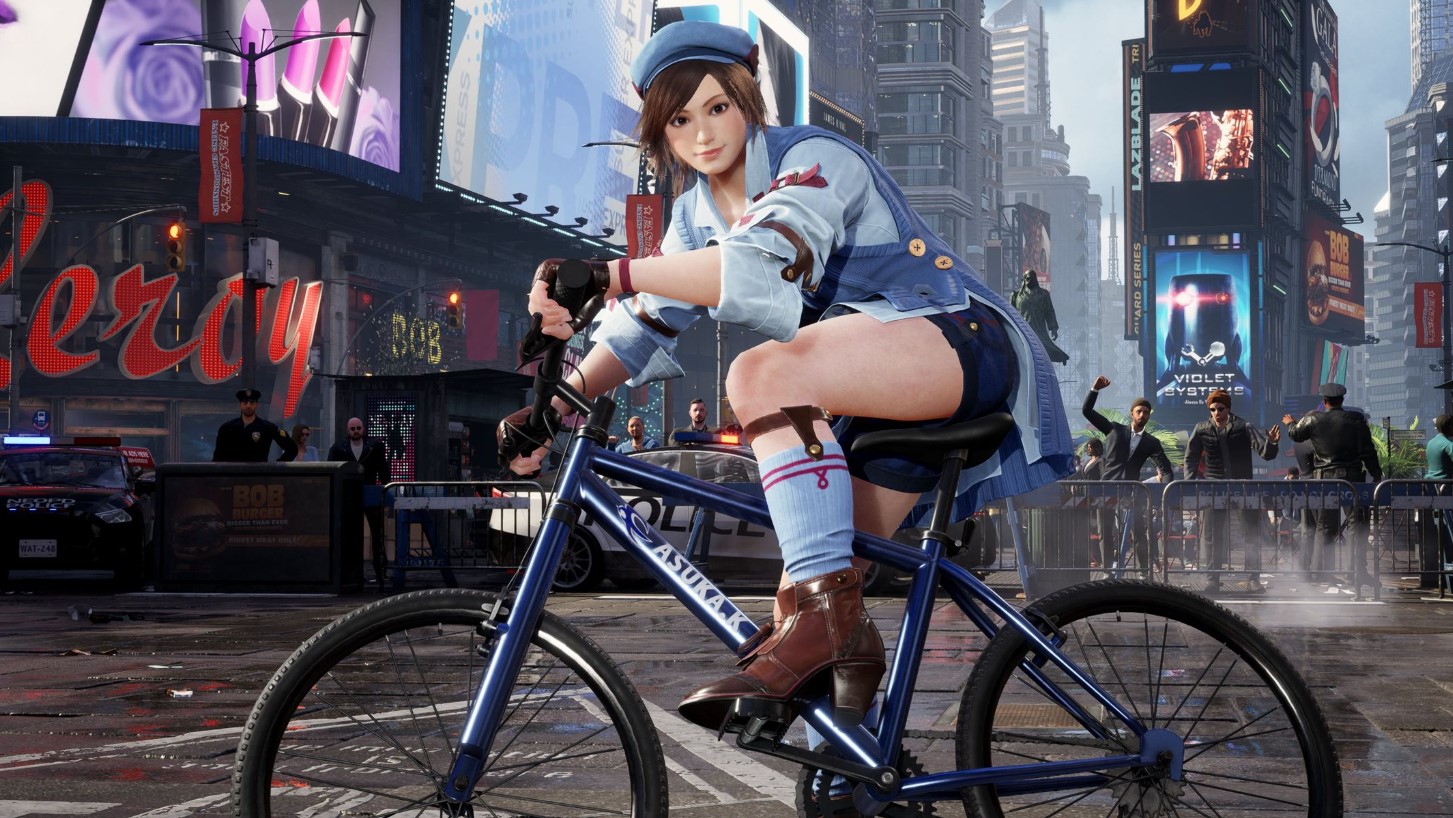
The Moves That Carry Asuka in Tekken 8 Past Green Ranks
Around the intermediate stage, something happens that catches a lot of players off guard. The stuff that worked stops working. People stop mashing into your counter-hits, they start sidestepping right against your pokes, and suddenly your character with bad generics feels genuinely bad.
This is the wall. Here’s what’s on the other side of it.
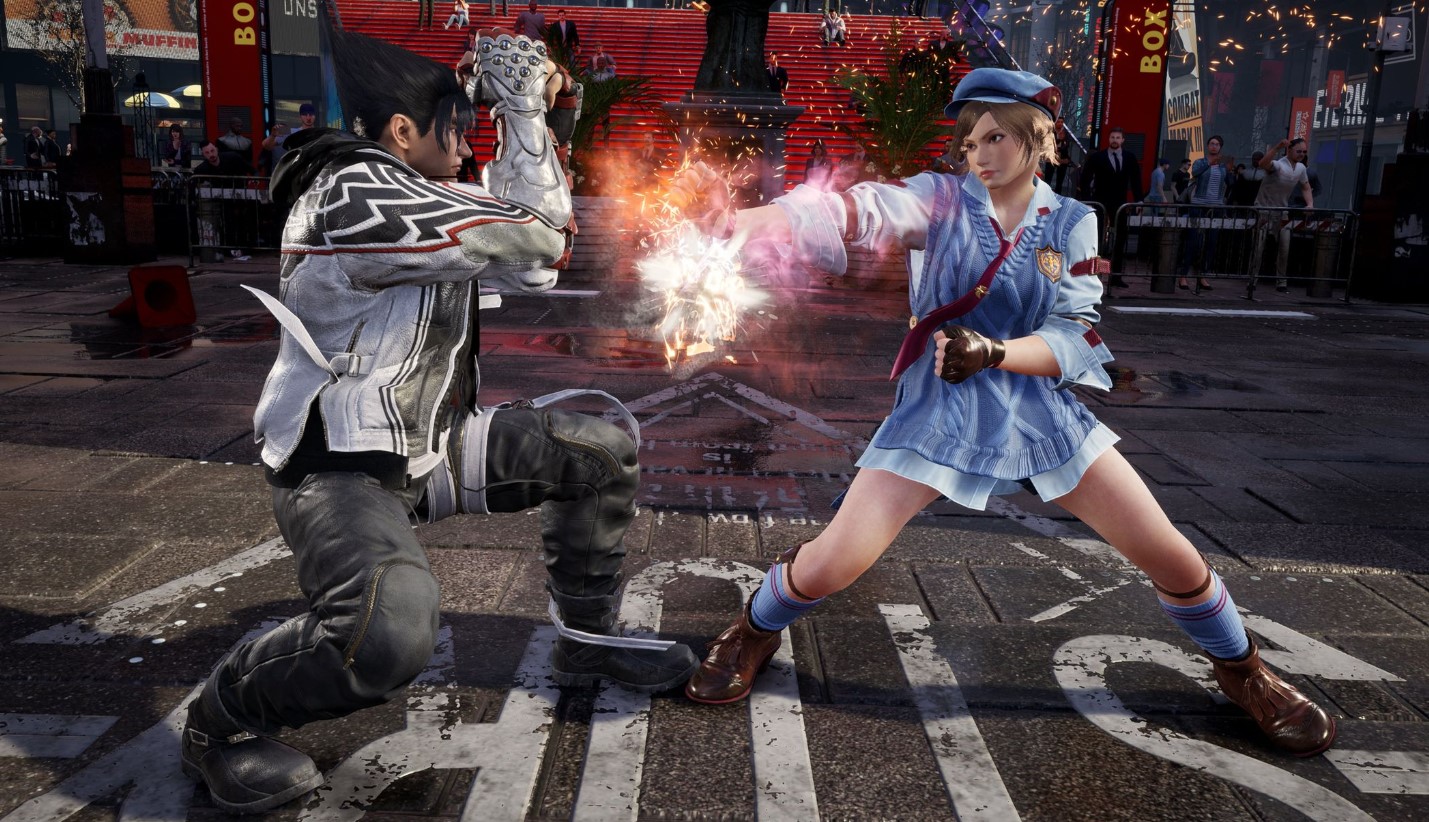
The defensive suite is the real character. b+1+3 is a reversal that gives you a free follow-up against punches and oki against kicks. f+2+3 is a punch sabaki that leads to a full combo on activation. b+2+3 is the kick equivalent. f+1+2 is a fast power crush with some jab evasion, safe on block, and it’s a heat engager on top of that.
Read that again. She has a reversal, two sabakis, and a safe power crush that builds heat. That’s four different ways to say “no” to somebody’s offense, each one covering different attack types. Learning which to reach for against which pressure is the actual skill ceiling here.
SS.2 is the move nobody’s ready for. An extremely evasive mid off a sidestep that engages heat. It’s unsafe on block at -13, so you can’t spam it, but landing it flips momentum completely. The tekkendocs guide’s own annotation on this move is basically a laugh, which tells you how absurd it feels to be on the receiving end.
f+4 is a plus-on-block homing launcher. In a game where her tracking is a listed weakness, having a homing tool that keeps you at advantage on block is enormous. Use it to lock people down when they start stepping.
uf+1,2 changed things in Season 2. It’s her 13-frame punisher, and in her stance it becomes a monster – a free follow-up on hit, tracking well, and doing it from plus frames. Community writeups flag it as “very abusable,” which in fighting game language means “learn this immediately.”
The stance is a buff, not a mode. Naniwa Gusto is what her heat gives her. Activate heat and you get infinite access to the NWG versions of her moves for the duration. Unlike stances that require constant input management, this is closer to a temporary power-up window that upgrades tools you’re already using. Which is why she’s easy to play – the depth is in reads, not in fingers.
Her frame traps at this level are worth memorizing too. f+4 into df+1,2. Her running heat approach into df+1,2. f,f+1 into d+3+4. Simple sequences, but they’re the difference between a mixup and a guess.
Stage Two: Where It Gets Real
At the higher ranks, everything narrows to one problem – she needs you to press buttons, and good players don’t.
That’s the historical criticism of this character, and it’s been echoed in community threads since launch. She’s oppressive at low levels and falls off against opponents who understand the matchup, because a turn-stealing character with nothing to steal has to actually open you up, and her offensive fundamentals aren’t built for that.
So high-level play becomes about manufacturing the impatience she needs. That means:
- Using chip damage as a lure. Her charged moves and heat pressure force the opponent to make a decision rather than sit there blocking forever.
- Whiff punishing at range. f+2 is her long-range whiff punisher, df+2 the faster and safer option when you need it quickly. Fishing for whiffs beats fishing for counter-hits against patient opponents.
- Wall carry into wall pressure. Several of her tools go from decent to genuinely scary at the wall – db+3 loses its pushback there, d+1+2 gets a guaranteed follow-up, and df+1 becomes far more threatening.
- Baiting with panic moves you don’t throw. Once someone knows she has a power crush and two sabakis, the threat alone changes how they pressure you. Half her defense is other people’s memory.
- Committing to reads, not habits. She’s a read-heavy character by design, rewarded for correctly guessing which option the opponent will take. There’s no safe automatic gameplan hiding underneath.
That last point is the honest one. If you want a character where correct execution produces correct results, this isn’t it. If you want a character where being right about a person feels like winning a psychological argument, it very much is.
Fighting Against Asuka in Tekken 8
Flip the camera. You’re facing her and you’re getting frustrated. Here’s the actual answer, drawn from the defensive breakdowns the community has put together.
Be patient. This is the whole matchup in two words. She’s built to punish overextension. Every one of her panic tools needs you to be swinging. Don’t overextend your pressure and most of her kit does nothing.
Sidestep right. Her tracking is a documented weakness, particularly on her main pokes up close. SSR is broadly the strongest movement option against her and it invalidates a chunk of her poking game.
Backdash outside the wall. Her knockdown low has limited range, so simply moving away is a legitimate answer to a big part of her mixup – as long as you’re not pinned.
Duck the right things. Several of her strings end in a high. Her crouching mid-into-high and her ranged elbow follow-up are both duckable, though the second has a mid alternative to watch for. Her mid string into a high can be ducked on the second hit, but note the second hit is guaranteed if the first lands as a counter-hit.
Punish the unsafe stuff properly. Her evasive sidestep mid is -13 with pushback, so test your character’s punish for it rather than assuming. Her keepout mid is -19 on block with pushback, which is genuinely launch-punishable if you lab it. Her mid whiff punisher is -18, so blocking it should hurt her.
| Her tool | Your answer |
|---|---|
| Pokes up close | Sidestep right |
| d+1+2 low | Backdash (away from wall) |
| Panic moves and sabakis | Don’t press; bait them out |
| SS.2 | Block and punish, -13 with pushback |
| b+3 | Block and launch, -19 |
| f+2 | Block and launch, -18 |
| WS strings into high | Duck the second hit |
Read that table and the shape of the matchup becomes clear. Her scariest options are all answers to your aggression. Take away the aggression and you’ve taken away most of the character.
The Identity Argument That Won’t Die
Now the part that makes her interesting beyond the frame data.
Since launch, players have argued about not just how strong she is but what she’s supposed to be. The original complaints ran that her movement got nerfed coming into Tekken 8, which hurt a character whose whole thing was controlling space, and that she was oppressive at low ranks while falling off badly at high ones.
Then the buffs came, and a stranger argument started.
One camp on the Steam forums put it bluntly: her core design was a defensive, evasive character who punished people for pressing into her, and who was supposed to struggle against opponents who stayed patient. That weakness was the point. Giving her tools to force offense against patient opponents, they argued, dissolved what made her distinct.
A patch that gave her stronger lockdown and mixup pressure drew accusations that she’d become “an embodiment of the incorrect design” – the complaint being that instead of buffing her poking and evasion, the developers handed her guaranteed 50/50s, turning a legendary defensive character into another 50/50 machine.
The counter-argument is just as reasonable, and worth stating fairly. She was never purely defensive. She’s a street brawler who adapted the family style into something scrappier, and offensive tools fit that fine. And there’s a practical version too – being unique doesn’t matter if you can’t compete, and a distinct character who loses every high-level match is a museum piece, not a fighter.
Both sides are arguing about something real. This is what happens when a developer buffs a character with a conceptual weakness rather than a numerical one. You can raise her damage without changing her identity. You can’t give her a way to beat patient opponents without changing what she is, because struggling against patient opponents was what she was.
No patch note resolves that. It’s a design philosophy question wearing a balance patch costume.
FAQ
Is she good for beginners?
Yes, one of the friendlier picks on the roster. One stance, forgiving execution, and a straightforward gameplan. The depth sits in reads rather than in your hands.
What are her biggest weaknesses?
Weak tracking that makes her steppable, the worst jab in the game, slow lows that get counter-hit, and weak early punishment. Her fundamentals are below average by design.
What is Naniwa Gusto?
Her stance, which stays active for the duration of heat. While it’s up she gets free access to her NWG moves, upgrading several tools rather than requiring separate stance management.
How do I stop losing to her?
Be patient and sidestep right. Nearly all her scariest options are answers to your aggression, so refusing to overextend removes most of the character.
What’s her main mixup?
d+1+2 as the low and 1+2 as the mid. The mid is safe and launches crouchers, which is what makes the guess genuinely uncomfortable.
Does she fall off at high ranks?
That’s the long-standing community read – oppressive early, tougher later, because opponents who stop mashing starve her turn-stealing tools. Buffs have narrowed the gap, which is exactly what the identity debate is about.
Which of her defensive tools should I learn first?
d+3+4. It’s a 14-frame counter-hit launcher that crushes lows almost immediately and is safe on block, so it functions as a safe hopkick you can throw into someone’s pressure.
Where That Leaves Her?
Play Asuka in Tekken 8, and you’re signing up for a character who wins arguments rather than exchanges. She has the worst jab in the game and one of the best defensive toolkits, and those two facts aren’t in tension – they’re the same design decision seen from two sides. Whether the buffs saved her or sanded her down depends entirely on whether you think a character’s weakness is a flaw to fix or the thing that made her worth playing. Personally? I’d rather have the version people argue about than a balanced one nobody has feelings about at all.
P.S. If you’re the kind of player who reads a whole guide before hitting practice mode, you’re our people, and passing this along is the simplest way to keep our small team writing them. Bookmark it too – patch notes keep moving, but the shape of this character has stayed stubbornly the same, and the sections on baiting and punishing will still hold up several seasons from now. And if creative or commercial collaboration is what brought you here, a direct message to the Lizet Manski team is always welcome.