
How to Make Chest in Minecraft: The Thirty-Second Version
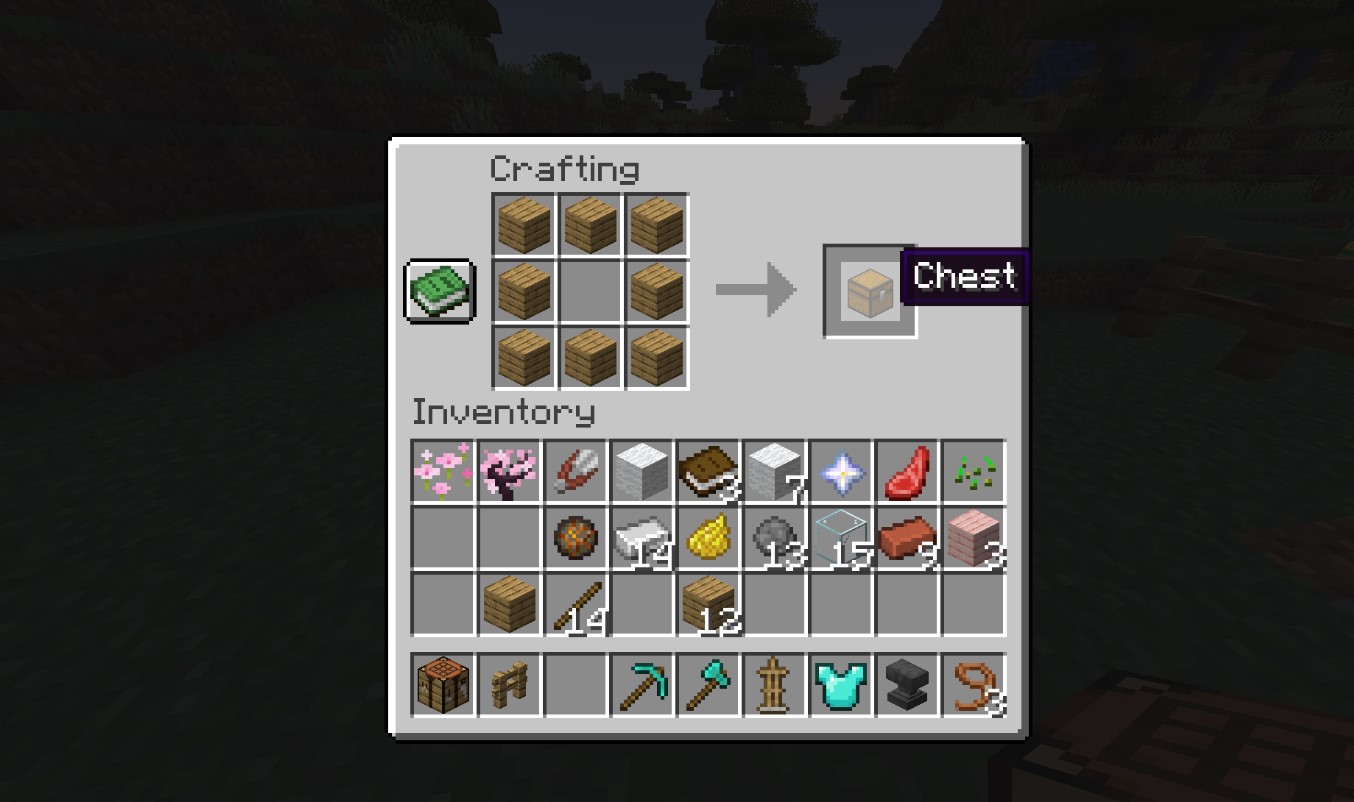
Eight wooden planks. Ring them around the edge of a crafting table’s 3×3 grid, leave the middle empty, done. One chest. That’s it. That’s the whole answer, and if that’s all you came for, you’re free to go.
But here’s the thing – storage in Minecraft stopped being simple about a year ago. The Copper Age drop landed on September 30, 2025 and added an entirely new chest type that oxidizes and gets emptied by a little robot. Wilderness Bound arrives today, September 15, 2026, as Java 26.3 and Bedrock 26.50, and it quietly tucks oxidized copper chests into the new abandoned camps scattered around the world.
So the honest version of “how to make chest in Minecraft” in late 2026 isn’t one recipe. It’s about six, and picking the wrong one costs you either obsidian or an afternoon.
Let’s go through the whole ladder, from your first panicked ten minutes in a dirt hut to a sorting room that runs itself.
| Chest Type | Recipe | Slots |
|---|---|---|
| Chest | 8 wooden planks around an empty center | 27 |
| Large chest | Two chests placed side by side | 54 |
| Trapped chest | 1 chest + 1 tripwire hook | 27 |
| Ender chest | 8 obsidian around 1 eye of ender | 27 (personal) |
| Copper chest | 1 chest surrounded by 8 copper ingots | 27 |
| Barrel | 6 planks + 2 wooden slabs | 27 |
| Chest minecart | 1 minecart + 1 chest | 27 |
| Shulker box | 2 shulker shells + 1 chest | 27 (portable) |
Why the Recipe Won’t Appear in Your Inventory Grid
This trips up more new players than anything else, so let’s kill it early.
Your personal inventory gives you a 2×2 crafting square. A chest needs a 3×3. So before any of this works, you need a crafting table – four planks, one per square, in that little 2×2 grid.
Get logs, turn one log into four planks, spend four planks on the table, place it, then feed the next eight planks into the ring. Two logs total will get you a table and a chest with a plank left over.
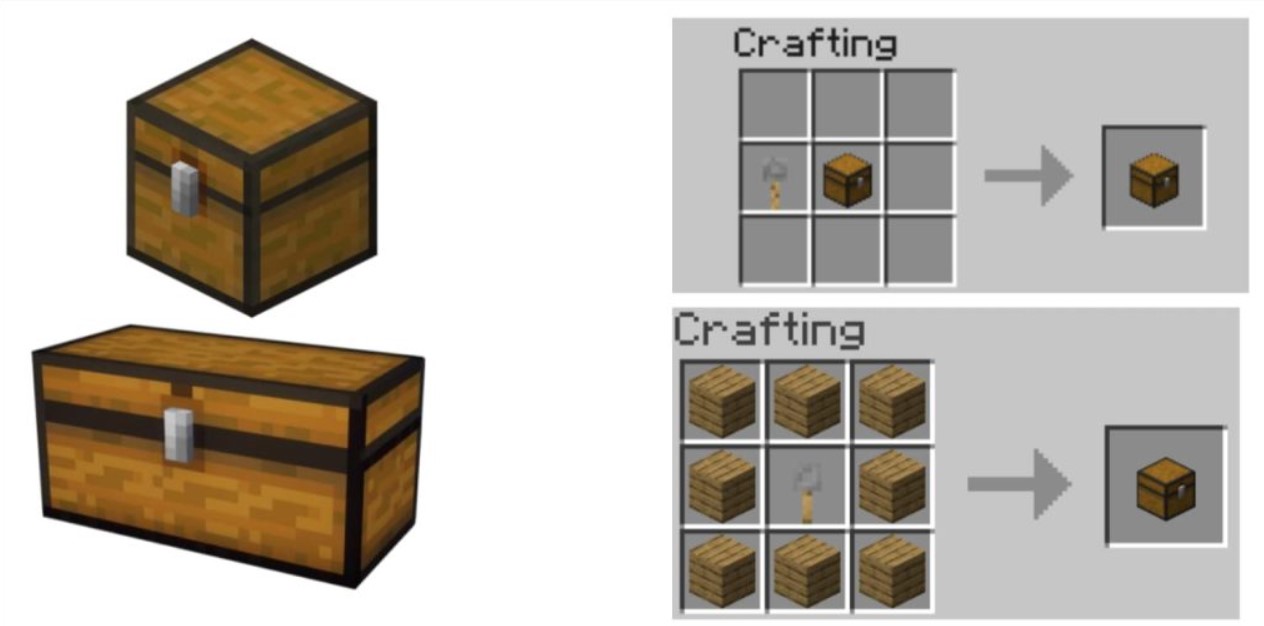
And good news: you can mix wood types. Three oak, two birch, three spruce – the game doesn’t care. That hasn’t always been true, and plenty of old tutorials still insist otherwise. With Wilderness Bound adding poplar to the family, that’s one more plank variety that works in the same recipe.
Stage One: One Chest, and the Mistake Everyone Makes
You’ve got your chest. Now place it somewhere sensible, which mostly means not doing the thing where you wall it in.
A chest won’t open if there’s a solid, conductive block directly above it. The lid physically needs room to swing. This is the single most common “my chest is broken” complaint, and it isn’t a bug.
What doesn’t block it:
Glass, ice, and other non-conductive full cubes are fine. Stairs are fine. Bottom-half slabs are fine on Java. And because chests themselves aren’t conductive, you can stack one chest directly on top of another and still open the lower one – which is the foundation of every compact storage wall you’ve ever seen in a screenshot.
The other blocker is funnier. A cat sitting on your chest will stop it from opening. No workaround except convincing the cat to move, which, as in real life, is a negotiation.
One more thing worth knowing early: chests aren’t flammable and don’t catch fire from lava. Your stuff is safer than you think. Creepers are still a problem, and lava flowing directly onto the block will still destroy it, but a stray torch won’t cost you your diamonds.
Stage Two: Doubling Up Without Wasting Wood
Place a second chest directly beside the first and they merge into a large chest – 54 slots in one interface. Costs nothing extra, takes no additional recipe.
Sometimes you don’t want that, though. Two separate 27-slot chests side by side is often better for organization than one big bin. A few placement habits worth learning:
- Sneak while placing the second chest on Java to keep them separate.
- Face a different direction when placing, and they won’t join either.
- On Bedrock, push a chest into position with a piston to force separation.
- Stack vertically instead of horizontally when floor space is tight – both chests stay usable.
- Name chests on an anvil before placing them, and the label shows in the interface.
In Java, a large chest’s top three rows correspond to the left half when you’re facing it, bottom three to the right. On Bedrock, the top rows belong to whichever half you placed first. Minor detail, matters enormously the moment you’re trying to remember where you put the redstone.
How to Make Chest in Minecraft Variants: Trapped, Ender, and Barrel
Three alternatives worth building before you’re anywhere near diamonds.
Trapped chest. One regular chest plus one tripwire hook. Looks almost identical to a normal chest, holds the same 27 slots, but emits a redstone signal proportional to how many players have it open. Classic for both actual traps and perfectly innocent door-opening contraptions. It won’t merge with a normal chest, only with another trapped chest.
Barrel. Six planks and two wooden slabs. Same 27 slots, and crucially it opens even with a solid block directly on top. If you’re building anything compact – a wall of storage, a shop counter, a ceiling stash – barrels solve the lid problem entirely.
Ender chest. Eight obsidian ringed around a single eye of ender. This one’s different from everything else: the 27 slots inside are yours, personally, and every ender chest in the world shows you the same inventory. Store something in the Overworld, retrieve it from the Nether. Multiplayer servers make this even better, since each player sees their own contents.
Two warnings on that last one. It needs a diamond pickaxe to mine the obsidian in the first place, and breaking an ender chest without Silk Touch gives you back eight obsidian rather than the chest itself. Plan accordingly.
Stage Three: Copper Chests and the Robot That Empties Them
Right. This is the part that changed everything, and it’s why storage tutorials written before late 2025 are now half out of date.
The recipe is one ordinary chest surrounded by eight copper ingots. Straightforward enough. But copper chests aren’t meant to be your permanent storage – they’re an inbox.
Here’s how the loop works. Spawn a copper golem by putting a carved pumpkin or jack o’lantern on a block of copper, and the game generates a copper chest right where that copper block was, with both golem and chest matching the block’s oxidation level. That golem then goes to work: if it isn’t holding anything, it checks up to ten copper chests in sequence, grabs up to 16 of the first item it finds, and carries it off to a nearby wooden chest.
Its search radius is 32 blocks horizontally and 8 blocks vertically from where it’s standing. Multiple golems can work the same area simultaneously.
So the intended flow is: dump your mining haul into a copper chest, walk away, and let the golem distribute it into your wooden storage. It’s automation that doesn’t require a single hopper.
| Wooden Chest | Copper Chest | |
|---|---|---|
| Tool to break it | Any, axe fastest | Stone pickaxe or better |
| Drops itself with wrong tool | Yes | No, contents only |
| Flammable | No | No |
| Changes over time | No | Oxidizes through 4 stages |
| Pistons can move it | No | No (Java) |
| Golem interaction | Receives items | Gets emptied |
| Angers piglins | Yes | Yes |
That oxidation column matters aesthetically and practically. Non-waxed copper chests drift from bright orange through exposed, weathered, and finally teal-green oxidized. Honeycomb waxes them in place. An axe scrapes oxidation back off, and a lightning strike will reset them too.
Fun quirk: place two copper chests of different oxidation levels next to each other and they still merge, with the large chest taking the less oxidized appearance. If either half is unwaxed, the whole thing is unwaxed.
And as of today’s update, you’ll start finding oxidized copper chests generating naturally inside abandoned camps in the new world generation. Free storage, if you can carry it home.
Stage Four: Chests That Travel
Once your base is sorted, the problem becomes moving things.
Chest minecart – one minecart plus one chest. Rides rails, holds 27 slots, and hoppers can feed it or drain it. The backbone of any long-distance item transport system.
Chest boat – a boat plus a chest. Perfect for ocean expeditions where you’re hauling more than your inventory holds.
Pack animals – donkeys, mules and llamas will all carry a chest once tamed, giving you portable storage that walks alongside you. Llama capacity depends on the individual animal’s strength, so some are considerably more useful than others.
Shulker boxes – two shulker shells and a chest. These are endgame, requiring a trip to an End city, but they keep their contents when broken and stack inside other containers. Nothing else in the game matches them for hauling.
Things That Will Ruin Your Storage Room
Learn these before they cost you something irreplaceable:
- Piglins turn hostile when you open or break a chest near them, including copper chests. Bring a barrel to the Nether instead.
- Breaking a chest spills everything onto the floor, where it’ll despawn in five minutes.
- Lava flowing over a chest destroys it and everything inside, permanently.
- A hopper under a chest will quietly drain it into whatever’s below, which is great when intended and catastrophic when forgotten.
- Copper chests mined with anything but a stone pickaxe or better drop their contents and nothing else – you lose the chest itself.
Habits Worth Stealing From Good Storage Rooms
- Barrels for walls, chests for rows. Barrels don’t need headroom, so a flush storage wall is far easier with them.
- Put an item frame above each chest with a sample of what’s inside – faster than reading labels.
- Name chests on an anvil before you place them; the interface keeps the name.
- Keep a copper chest at your entrance as a dump point and let the golem distribute.
- Ender chest in your pocket for mining trips – it’s the safest place in the game for what you find.
FAQ
What’s the basic chest recipe?
Eight wooden planks in a ring around an empty center square of a crafting table. It makes one chest.
Can I mix different wood types?
Yes. Any combination of plank types works in the same recipe.
Why won’t my chest open?
Either there’s a solid conductive block directly above it, or a cat is sitting on it. Slabs, stairs and glass are fine.
How do I get 54 slots?
Place two chests side by side and they merge into a large chest automatically.
How do you make a copper chest?
Surround one ordinary chest with eight copper ingots. You’ll also get one free whenever you create a copper golem.
Do chests burn?
No. Chests aren’t flammable and won’t catch fire from lava, though flowing lava still destroys them.
What’s the difference between a chest and a barrel?
Barrels hold the same 27 items but open with a solid block above them, which makes them better for tight builds.
Eight Planks, Then Everything Else
The joke about Minecraft storage is that the recipe you searched for takes ten seconds to learn and the rest takes a hundred hours to get right.
Your first chest is eight planks and a crafting table. Your fiftieth is part of a copper inbox feeding a wall of barrels with a golem shuttling between them while you’re off exploring a dappled forest. Same game. Wildly different problem.
Start with the eight planks. Build the barrel wall when you’re tired of scrolling. Add copper when you’re tired of sorting. That’s the whole progression, and it works in every world you’ll ever make.
If this spared you a trip through four outdated tutorials, share it on X, Reddit or your realm’s Discord – small writing teams live entirely on people passing things along, and one link genuinely helps. Bookmark it as well, since storage keeps changing and we’ll be updating these tables with each drop rather than starting fresh. And if you’re after creative or commercial collaboration, write to the Lizet Manski team directly – our inbox opens even with a block above it.