
The Best Heavy Armor in BG3 to Turn Your Tank Into a Wall
There’s a special kind of satisfaction in Baldur’s Gate 3 when an enemy swings at your frontliner, the dice roll, and… miss. Then another miss. Your tank just stands there, unbothered, soaking hits like a fortress while your squishy wizard blasts away from safety. That feeling? That’s the payoff of great heavy armor. And BG3 has some genuinely spectacular heavy armor to chase.
Here’s the thing though – with 24 heavy armor pieces scattered across three acts, figuring out which ones are actually worth wearing (and when) can get overwhelming fast. Some are early-game workhorses. Others are late-game legendaries that make you nearly untouchable. Pick the wrong one and you’re leaving precious Armor Class on the table. So knowing the best options for each stage matters a lot.
Whether you’re rolling a Paladin, Fighter, Cleric, or a heavy-armor Ranger, this guide covers the best heavy armor in BG3 top to bottom – the standout picks act by act, their stats and effects, exact locations, and which class should wear what. Let’s build you an unbreakable tank.
Heavy Armor Basics: Who Can Wear It?
Quick primer first, because heavy armor comes with rules you need to understand. Not everyone can strap on a full plate of steel, and knowing the proficiency system shapes your whole party build.
Heavy armor is the top end of the armor spectrum in BG3, just like in Dungeons & Dragons. It offers the best raw protection at the trade-off of stealth – most heavy armor gives you disadvantage on Stealth checks. It’s ideal for frontline characters who want to absorb hits while your backline deals damage safely.
Here’s who can actually use it:
- Fighter – full heavy armor proficiency from level one.
- Paladin – full proficiency from level one, a natural tank.
- Cleric – only certain domains grant heavy armor proficiency (like Life, Tempest, and War).
- Ranger – can pick it up as an option in some builds.
- Anyone with the Heavily Armored feat – spend a feat to unlock proficiency.
That feat point is worth remembering. Some heavy armor pieces are so good that players take the Heavily Armored feat purely to use them on a character that couldn’t otherwise. And as you’ll see, one legendary piece bypasses the proficiency requirement entirely, letting even a wizard wear it. But we’ll get to that showstopper shortly.
One key mechanic: because heavy armor uses a fixed base Armor Class and ignores your Dexterity modifier, your AC is entirely about the armor itself plus shields and buffs. That makes picking the highest-value piece genuinely important. A higher base AC directly translates to fewer hits landing on you.
The Best Heavy Armor in BG3: Act 1 Picks
Let’s start where your journey begins. Act 1 has a few standout heavy armor pieces that can carry you a surprisingly long way, and one of them is a fan-favorite that some players wear until the very end.
The crown jewel of Act 1 is the Adamantine Splint Armor. This is crafted at the Adamantine Forge in the Grymforge area of the Underdark, using a Splint Mould and Mithral Ore. It boasts a base AC of 18, but its real value is the game-changing effect: wearers cannot be critically hit. That crit immunity is huge, because some enemies have advantage or even guaranteed crit chances, and this armor shuts that down entirely.
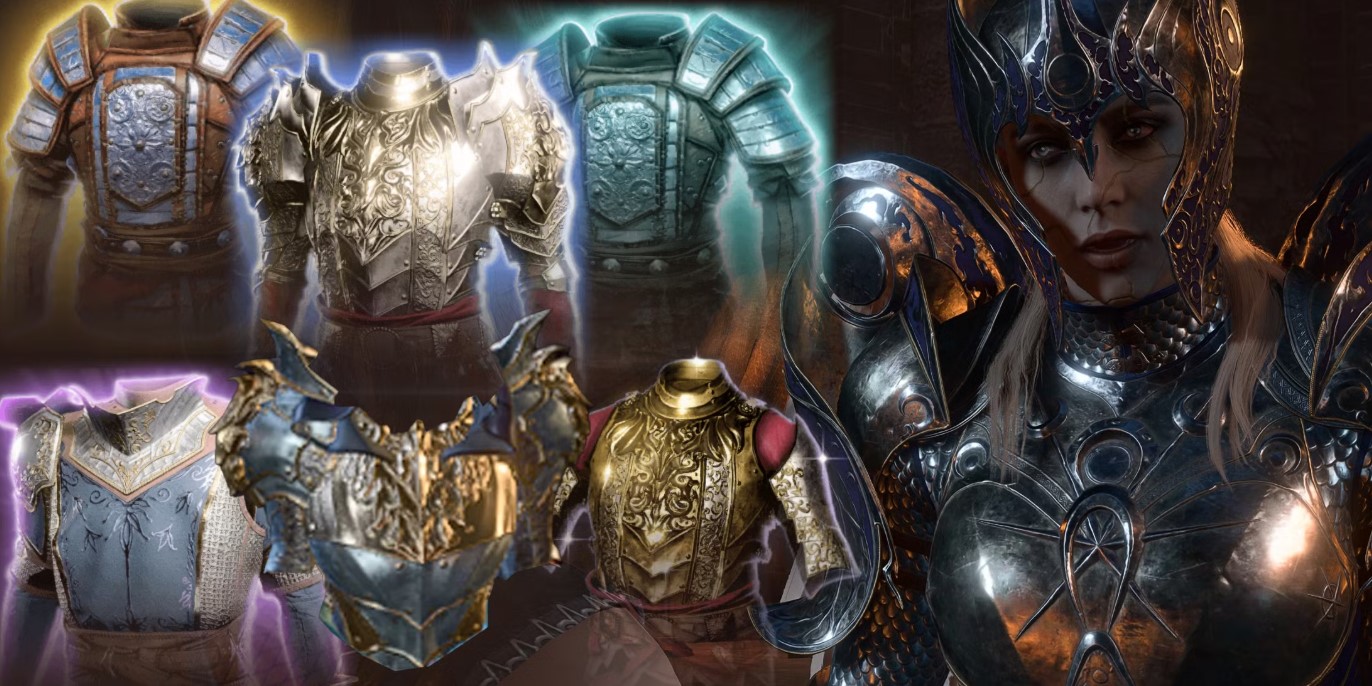
On top of crit immunity, the Adamantine Splint automatically reduces all incoming damage by 2, and its Reeling effect penalizes enemies who hit you, indirectly boosting your effective defense. Here’s why it’s so beloved:
- AC 18 base, solid for Act 1 and beyond.
- Crit immunity – no enemy can land a critical hit on you, period.
- Damage reduction of 2 from every incoming attack.
- Reeling – attackers who hit you suffer an attack penalty.
- Craftable early – available in Act 1’s Underdark.
The community is genuinely split on whether the Adamantine Splint is the best. Some players swear by it, wearing it for their entire 100-plus hour campaign thanks to that crit immunity. Others argue better armor exists later, and that the Adamantine’s effects don’t stack ideally. Both takes are valid. But there’s no denying it’s the premier Act 1 heavy armor and a fantastic long-term option, especially for Clerics and Fighters.
Other solid Act 1 picks include basic Chain Mail (AC 16) from the vendor Roah Moonglow in the Shattered Sanctum, which is a nice early upgrade over starting gear. But the Adamantine Splint is the one to chase.
Act 2 Upgrades Worth Grabbing
As you move into Act 2, a few strong heavy armor options open up. These provide meaningful upgrades and cover you through the Shadow-Cursed Lands and beyond. Let me highlight the best.
A standout accessible pick is the Dwarven Splintmail, sold by the merchant Lann Tarv in Moonrise Towers once you get Z’rell to unlock his extra stock. With AC 19, it also grants a Constitution-style HP bonus plus bonuses to Strength saves and ability checks, making it one of the best heavy armors you can get relatively early in Act 2. And a handy community-discovered quirk: it restocks after long rests, so you can buy multiple copies if you’re running a heavy-armor party.
There’s also Ketheric’s armor, described by the community as essentially a better version of the Adamantine Splint, obtained through Act 2’s story progression. It’s a natural upgrade if you want to move past your Act 1 gear.
Here’s the thing to keep in mind about Act 2, though. Many of the truly great heavy armors are still ahead of you in Act 3, often as quest rewards from ending Act 3 questlines, including companion quests. So Act 2 is somewhat of a bridge – grab the Dwarven Splintmail or Ketheric’s armor to stay strong, knowing the real endgame pieces are coming. Don’t over-invest emotionally in your Act 2 gear.
The Best Heavy Armor in BG3: Act 3 Legendaries
Now for the good stuff. Act 3 is where the truly elite heavy armor lives, and this is where your tank goes from “sturdy” to “practically invincible.” Several standout pieces compete for the top spot. Let me break them down.
The undisputed king is the Helldusk Armor. This late-game legendary is widely considered the best armor in the entire game, heavy or otherwise. You loot it off the devil Raphael after defeating him in the House of Hope in Act 3. Here’s what makes it so absurd:
- AC 21 base – the highest of any heavy armor in the game.
- Grants proficiency to anyone – even a wizard can wear it, no feat needed.
- Prime Aegis of Fire – reduces all incoming damage by 3, immunity to Burning, resistance to Fire.
- Infernal Retribution – spellcasters who target you risk being Burned.
- Fly spell – grants you the ability to fly, adding fantastic mobility.
That combination is unmatched. The AC 21, the flat -3 damage reduction, the debuffs on attackers, and the fly ability make Helldusk the premier heavy armor choice for all classes. The fact that it grants proficiency to anyone means you can even slap it on a spellcaster for an absurdly tanky mage, though you’ll likely want it on your heavy-hitting Fighter, Cleric, or Paladin. It’s the endgame goal for any tank build.
Two more excellent Act 3 options are worth knowing. The Armor of Persistence is the best heavy armor you can simply buy – purchased from Dammon at the Forge of Nine in the Lower City. With AC 20, magical plating that reduces incoming damage by 2, resistance to conventional weapon attacks, and saving throw bonuses, it’s a fantastic pick that doesn’t require beating a tough boss. Perfect for a companion if you’ve claimed the Helldusk for yourself.
There’s also the Blackguard’s Plate, a rare set found in the Bhaalist Crypt off the NPC That Which Guards, for players walking a darker path. And the Emblazoned Plate of the Marshal offers AC 19, a flat -2 damage reduction, and fire resistance for those who don’t mind a slightly evil pickup.
How to Choose the Right Heavy Armor for Your Class?
With all these options, how do you actually decide? Let me help you match the best heavy armor to your character and situation, because the “best” piece depends on your build and progression.
If you’re playing a main-character Paladin or Fighter, the progression path is clear: start with the Adamantine Splint in Act 1 for crit immunity, upgrade to something like the Armor of Persistence in Act 3, and ultimately claim the Helldusk Armor as your endgame piece. That’s the optimal tank journey.
Here’s a quick decision framework:
- Want the absolute best? – Helldusk Armor (AC 21, all-class, fly, huge damage reduction).
- Want the best buyable option? – Armor of Persistence (AC 20, no boss fight needed).
- Want crit immunity early? – Adamantine Splint Armor (AC 18, craftable in Act 1).
- Playing a non-proficient class? – Helldusk grants proficiency to anyone.
- Kitting out a companion? – give them whichever top piece you’re not using yourself.
That crit immunity versus raw AC tradeoff sparks real debate in the community. Some players value the Adamantine Splint’s crit immunity so highly they never switch off it, since a single enemy crit can be devastating.
Others prefer the higher AC and effects of Helldusk or Armor of Persistence, accepting a small crit risk for better overall defense. Consider pairing a crit-immune helmet (like the Helldusk Helmet or Helm of Balduran) with a high-AC body armor to get the best of both worlds.
And don’t forget shields. The community strongly recommends pairing heavy armor with a good shield for even more AC. Heavy armor plus a top shield is often considered the best defensive setup in the game, better than most medium armor options.
Squeezing the Most From Your Heavy Armor
Let me leave you with some practical tips for maximizing your tank’s defensive potential, because great armor is only part of the equation. Smart play amplifies it.
First, consider the Heavy Armor Master feat if you’re committed to tanking. It provides an additional damage reduction on top of what your armor already gives, stacking to make you remarkably durable against physical attacks. Combined with the Adamantine Splint or Helldusk’s built-in reduction, you’ll shrug off hits that would cripple other characters.
Here are more ways to boost your tank:
- Stack defensive buffs – Bless boosts saves, Shield of Faith adds AC, and Mirror Image adds layers of defense.
- Pair with a shield – the single easiest way to add more AC to a heavy-armor build.
- Position to protect allies – put your tank between enemies and your squishy backline.
- Use elemental resistances – some armors resist fire or other damage types, so match them to encounters.
- Grab a crit-immune helmet – combine with high-AC body armor for near-total protection.
That positioning point is crucial. Even the best heavy armor in BG3 is wasted if your tank isn’t actually drawing enemy attacks away from your vulnerable casters. Use your durable frontliner to control space, block chokepoints, and body-block enemies from reaching your damage dealers. A tank’s job is to be a wall, so position like one.
And finally, remember that armor is just one piece of your defensive puzzle. Combine great heavy armor with smart feat choices, buff spells, a solid shield, and good positioning, and your frontliner becomes an immovable object that trivializes many of the game’s toughest fights. That’s the dream a proper heavy-armor build delivers.

FAQ
What’s the best heavy armor in BG3?
The Helldusk Armor, looted from Raphael in the House of Hope in Act 3. It has AC 21, grants proficiency to any class, reduces damage by 3, and even lets you fly.
What’s the best early heavy armor?
The Adamantine Splint Armor, crafted at the Adamantine Forge in Act 1’s Underdark. It has AC 18 and makes you immune to critical hits.
Which classes can wear heavy armor?
Fighters and Paladins from level one, certain Cleric domains, and Rangers by choice. Anyone can wear it with the Heavily Armored feat.
What’s the best heavy armor you can buy?
The Armor of Persistence, purchased from Dammon at the Forge of Nine in the Lower City. It has AC 20 and reduces incoming damage by 2.
Can a wizard wear the Helldusk Armor?
Yes. The Helldusk Armor grants heavy armor proficiency to any class that equips it, so even a wizard can wear it for absurdly high AC.
Is crit immunity worth it over higher AC?
It’s a real tradeoff. The Adamantine Splint’s crit immunity prevents devastating hits, while Helldusk offers higher AC. Many players combine a crit-immune helmet with high-AC body armor.
Should I pair heavy armor with a shield?
Absolutely. A shield adds more AC, and heavy armor plus a top shield is considered one of the best defensive setups in the game.
Wrapping It Up
From the crit-immune Adamantine Splint in Act 1 to the buyable Armor of Persistence and the legendary, do-everything Helldusk Armor in Act 3, there’s a clear progression path to turn any Fighter, Paladin, or Cleric into a nearly unkillable wall. The Helldusk stands above them all, but every piece here earns its place.
My honest advice? Craft the Adamantine Splint early for that invaluable crit immunity, upgrade through Act 2 with the Dwarven Splintmail or Ketheric’s armor, and make the Helldusk Armor your endgame goal. Pair whatever you wear with a solid shield, consider the Heavy Armor Master feat, stack your buffs, and position your tank to soak the hits your backline can’t. Do that, and enemies will bounce off you like rain off a rooftop.
Great heavy armor is one of the most satisfying power fantasies BG3 offers – the joy of watching attack after attack miss never gets old. Now go forge, loot, and buy your way to an unbreakable tank, and make the Forgotten Realms tremble. Absolute cinema.
P.S. Here’s your natural 20: if this guide raised your Armor Class against confusion, send it charging across your social feeds so fellow adventurers can gear up their tanks too, and pin it to your bookmarks like a legendary set you’ll want to re-equip before your next hard fight. Every share is basically a +1 to our team’s morale that keeps the guides rolling. And if you’re seeking creative or commercial collaboration, the Lizet Manski team is one message away – reach out directly and let’s forge something legendary together.