Co-op Horror Games for Two Are Four Different Experiences
Almost every co-op horror game is balanced for four players. That is the genre’s default, and it means two players are nearly always playing a version of the game nobody designed. Sometimes that is a gift. A four-player game played by two is thinner on bodies, shorter on backup and far more frightening, which is the entire reason you came. Sometimes it is a wall, because the objective assumed somebody was holding a door.
But the more useful distinction is not difficulty. It is what the game does to the two of you.
Two people playing horror together fall into one of four dynamics, and they feel completely different. One where you both see the same monster and panic in unison. One where only one of you can see it and has to say so fast. One where one of you acts while the other watches a screen. And one where your decisions and theirs produce separate outcomes you only compare afterwards.
Those four shapes suit different pairs. A couple on a sofa wants something different from two friends on voice chat three time zones apart. So this sorts by the dynamic rather than by the game, and names what actually supports each.
Dynamic One: Symmetrical Panic
Both players have the same information, the same abilities and the same vulnerability. When something goes wrong, it goes wrong for both of you at once.
This is the loudest and the easiest to start. Nobody has a role to learn, nobody is in charge, and the comedy comes from two people making the same bad decision simultaneously.
R.E.P.O. is the current high-water mark for this feeling, even though it scales to six. Semiwork’s physics extraction horror arrived in Steam early access on February 26, 2025, peaked at 230,000 concurrent players in its first early access weekend, and still held 145,000 active players by mid-March. It was the highest-grossing paid game on Steam for the week of March 11 to 18 that year, sitting second in overall revenue behind Counter-Strike 2, and it took Best Early Access Game at the Golden Joystick Awards that November.
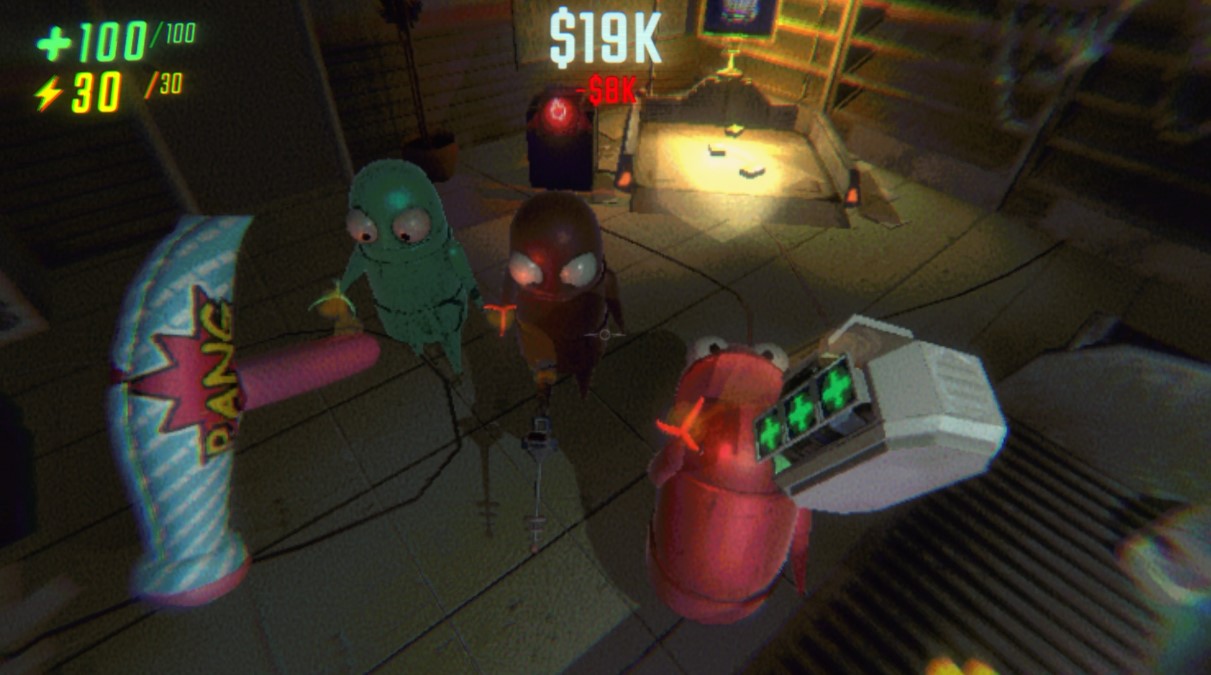
What makes it work at two specifically is the physics. You are carrying fragile valuables past roaming monsters to an extraction truck, filling a quota, and damaged items lose value. With six players, a dropped vase is somebody else’s fault. With two, there is no diffusion of responsibility, and the moment one of you clips a doorframe is an event in your friendship.
The Service Station between runs lets you spend SURPLUS on upgrades, weapons, explosives, tools, health and energy – and a May 7, 2026 update added a cosmetic system, a redesigned shop, a racing mode and new items, so the version you boot today is substantially more built out than the one that went viral.
Shift at Midnight is the sharper pick if you want a lower cap. Released July 22, 2026 on Steam at up to three players, it sits at 90% Very Positive. You are running a convenience store in 1993 America, keeping the business going while humans are quietly being impersonated by doppelgangers. A three-player ceiling means two is only one body short of full, which is the easiest kind of co-op horror to play as a pair.
Dynamic Two: Split Knowledge
One of you can see something the other cannot, and the game runs on how fast you can say it out loud.
This is the most interesting dynamic for two people and the hardest to find, because it requires asymmetry built into the design rather than emerging from the chaos.
Phasmophobia is the standard-bearer, and at two players the asymmetry becomes unavoidable. With four investigators you can all crowd the same room. With two, the equipment has to be split – which means one of you is reading an EMF spike while the other is in the dark being hunted, and neither of you has the full picture. The ghost identification puzzle stops being a group exercise and becomes a conversation under pressure.
PANICORE takes the idea somewhere literal. It caps at five, and its creatures can react to player voices – so the thing that lets you share information is also the thing that gives you away. At two players, every piece of knowledge you pass to your partner costs you something.
Worth being honest about a limitation here: proximity voice chat, which most of these games lean on, is less dramatic with two people than with six. Half the fun of proximity audio is hearing a stranger scream three rooms away. With a pair, you are mostly just talking to each other. Pick split-knowledge games for the information problem, not for the audio comedy.
| Player Cap | What It Means for Two |
|---|---|
| 2 only | Built for you. Nothing is missing |
| Up to 3 | Near-full. The friendliest ceiling for a pair |
| 1 to 4 | Solo-viable, so two is a supported midpoint rather than a compromise |
| Up to 4 | Usually harder at two, and usually scarier for it |
| Up to 5 or 6 | Objectives may assume more hands. Expect to fail more |
| Up to 8 | Designed for crowds. Two players will feel the emptiness |
That table is the practical half of this whole subject. A game that lists 1 to 4 has been balanced for a solo player, which means two is comfortably inside its design. A game that says “up to 8” has not.
Dynamic Three: Divided Labour
One of you acts, the other operates. The roles are different, and neither works alone.
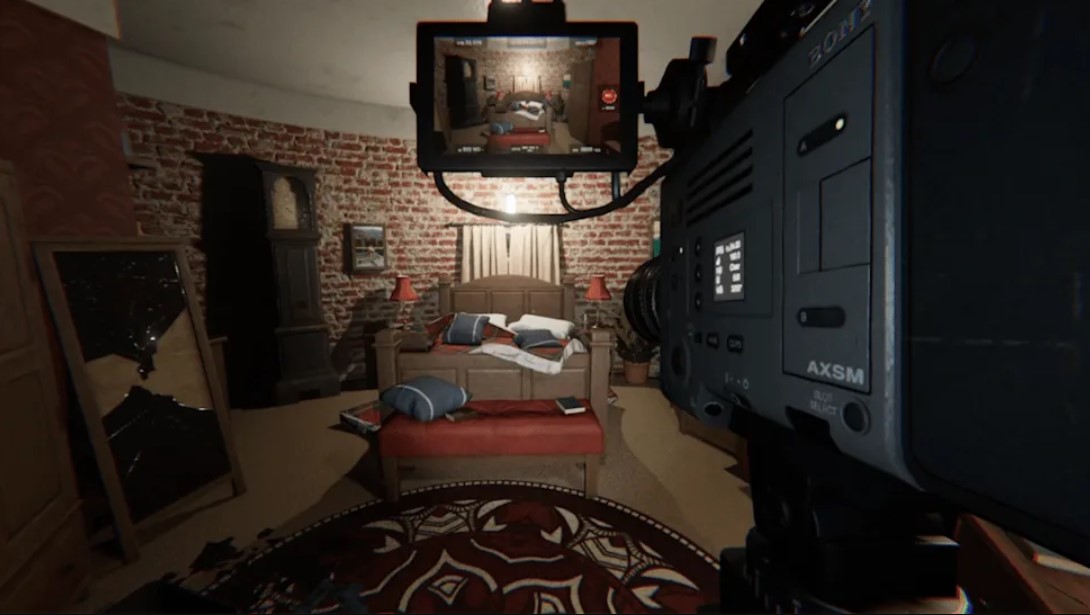
Content Warning is the clearest example, and notably it is one of the few in this genre with a stated floor of two players rather than one. You are filming frightening encounters in the Old World for an in-game video channel, which creates an immediate and funny division: somebody holds the camera, somebody is in front of it. At two players that split is total. One of you is the operator and one of you is the content.
Escape the Backrooms supports up to four and produces a different kind of division – the sanity system. Fancy Games and Blackbird Interactive’s take on the Backrooms left early access for a full Windows release on October 23, 2025 and reached PS5 and Xbox Series on May 28, 2026, carrying more than 30 levels from the yellow level 0 downward, with smilers, skin stealers and hounds in them. Sanity loss causes hallucinations and can be fatal, managed with flashlights and food.
With two players, sanity management becomes a job. One of you is navigating and one of you is watching both your conditions, because there is no third person to notice that you have been in the dark too long. The game reviewed moderately – GameSpot gave it a 6 out of 10 and called the loop sparse – but the level-discovery hook and the pair dynamic are the reasons people keep going back.
Hazard Levels is worth flagging for anyone reading this in November. Wales Interactive’s physics survival horror is in Steam early access now with a full PS5 and Xbox Series X|S release scheduled for November 12, 2026, built for one to four players around recovering ingredients from unstable rifts beneath a British pub, with a Gravity Gauntlet and proximity voice chat. The one-to-four range and the physics focus put it in exactly the right bracket for a pair.
The Co-op Horror Games for Two That Were Actually Designed for Two
Here is the thing almost no recommendation list mentions, and it is the only mode in mainstream horror built for exactly two people.
The Dark Pictures Anthology’s Shared Story mode is a two-player online mode. Not up to two. Exactly two.
How it works, per the official guidance:
- Both players are active simultaneously, each with their own controller, each controlling different characters.
- Some scenes are shown to both of you. Others are shown to only one of you.
- Your decisions resolve independently, so your outcomes can come apart from your partner’s.
- It is supported across all five games in the anthology, per the official FAQ.
- It is recommended for a replay rather than a first playthrough.
Read those bullets again and notice that Shared Story is dynamic two and dynamic four at the same time. You are each holding information the other does not have, and your choices are producing separate consequences. That is a structurally different experience from two people shouting in a Backrooms corridor, and it is the single most underrated thing in co-op horror.
The anthology’s five entries are Man of Medan from August 2019, Little Hope from October 2020, House of Ashes from October 2021, The Devil in Me from November 2022, and Directive 8020 from May 12, 2026.
Movie Night is the local alternative and a different proposition: two to five players in the same room, sharing one controller that gets passed to whoever’s character is in the current scene, with each player seeing only their own character’s scenes plus the shared ones. At two players in one room, that is a genuinely good evening – you alternate the controller and watch each other make mistakes you cannot prevent.
The Warning About Directive 8020
Since it is the newest entry and the obvious thing to reach for, this needs saying plainly.
Supermassive’s Directive 8020 launched on May 12, 2026 for PS5, PC and Xbox Series with Movie Night couch co-op for up to five players, and online play was added afterwards as a free post-launch update – the first time the series offered online Movie Night, with couch and online play mixable.
So if you and one other person are in different houses and you are buying the newest Supermassive game expecting the two-player online experience out of the box, check the current state of the game before you commit. Online was not there on day one.
The reception is also worth knowing. Metacritic has it at 73 on PC, 72 on PS5 and 68 on Xbox Series, with OpenCritic reporting 53% of critics recommending it – the weakest-reviewed entry to carry the Dark Pictures name. Reviewers praised the visuals, the sound, the Turning Points rewind system and the lead performances from Lashana Lynch and Anna Leong Brophy, and criticised repetitive stealth sections, stiff animations, awkward branching navigation and softlocks.
For a two-player Shared Story run, one of the earlier four entries is the safer purchase.
Matching Co-op Horror Games for Two to the Pair You Actually Are
| If You Are | Pick This Dynamic | Why |
|---|---|---|
| A couple on one sofa | Divided labour or Movie Night | One controller, alternating roles, nobody needs a headset |
| Two friends on voice chat | Split knowledge | The conversation under pressure is the whole game |
| A pair who laugh rather than scream | Symmetrical panic | Shared bad decisions, physics, dropped valuables |
| People who like arguing afterwards | Independent consequence | Shared Story lets your outcomes come apart, giving you something to compare |
| Someone playing with a nervous partner | Divided labour | The anxious one can operate rather than be in front |
| Two completionists | Split knowledge | Phasmophobia’s evidence puzzle rewards two people thinking |
That last row is worth expanding. The nervous-partner case is the most common real situation in two-player horror and almost nobody designs recommendations around it. Putting the frightened person on camera duty, sanity monitoring or van equipment gives them a job that is genuinely useful and keeps them out of the corridor. Content Warning and Phasmophobia both support that naturally. R.E.P.O. does not – in R.E.P.O. you are both in the corridor.
What Two Players Changes Mechanically
Stepping back from dynamics, four concrete things happen when a four-player horror game is played by two.
- There is no redundancy. One death is half your team. In games where a downed player needs reviving, the maths frequently means both of you die.
- Objectives take longer, so you spend more in-game time exposed. Quota games like R.E.P.O. and Lethal Company feel this hardest, since the quota does not shrink.
- You cannot split and cover. Any plan involving two groups is off the table, which removes a whole category of strategy and replaces it with constant proximity.
- The horror lands harder. Fewer bodies, fewer flashlights, longer silences. Every list that calls two players “suboptimal” is measuring efficiency, not fear.
That last point is the honest case for playing these games as a pair. You are trading competence for dread, and dread is the product.
FAQ
What co-op horror game is actually designed for two players?
The Dark Pictures Anthology’s Shared Story mode, an online mode for exactly two players, each controlling different characters, with some scenes shown to only one player and decisions resolving independently. It is supported across all five games.
Is Phasmophobia good with only two players?
Yes, and arguably better. With two investigators, the equipment has to be split, so one person is reading evidence while the other is exposed, which turns ghost identification into a conversation under pressure.
What is the best player cap for a pair?
Games listing one to four, since they are balanced for solo play and two sits comfortably inside that. A ceiling of three, as in Shift at Midnight, is also friendly. Avoid anything built for eight.
Can two people play R.E.P.O.?
Yes. It supports up to six, so two is harder – the quota does not shrink and fragile valuables lose value when damaged – but the reduced margin for error is the appeal.
Does Directive 8020 have online co-op?
Not at launch. It shipped on May 12, 2026 with Movie Night couch co-op for up to five, and online play arrived afterwards as a free post-launch update, with couch and online play mixable.
What works best for a couch rather than a headset?
Movie Night, which runs two to five players in one room sharing a single controller passed to whoever’s character is in the current scene.
What should a nervous player do in two-player horror?
Take the operator role – camera duty in Content Warning, equipment or sanity monitoring elsewhere. It is genuinely useful and keeps them out of the corridor.
Ask What You Want to Happen Between You
The reason two-player horror recommendations usually disappoint is that they answer the wrong question. They tell you which games support two players, which is almost all of them, and then rank them by how good they are with four.
What actually determines whether an evening works is the dynamic. Two people who want to laugh should be dropping vases in R.E.P.O., not managing sanity bars. Two people who want to be properly unnerved should be splitting Phasmophobia equipment until neither of them can see the whole room. Two people on one sofa should be passing a controller back and forth in Movie Night. And two people who like having something to argue about afterwards should be running Shared Story, where the game deliberately shows you different scenes and lets your decisions come apart.
The genre’s great unspoken fact is that most of it is balanced for four and plays better at two, because fewer flashlights means longer silences, and longer silences are what you paid for.
So pick the dynamic first. The game is the easy part.
Already decided who holds the camera? Share this, bookmark it, and go be somebody’s unreliable backup – it builds character. If creative or commercial collaboration brought you here, the Lizet Manski team is one message away.