
GTA 6 Biggest Changes: What To Expect
Thirteen days out, the headline change everyone repeats is the map. Leonida is roughly twice the size of GTA 5’s, which Rockstar calls the largest map the studio has ever built. That is the least interesting change on the list.
Work through everything Rockstar has actually confirmed and a pattern appears that nobody is naming: almost every major system in GTA 6 retains something that GTA 5 threw away. The police remember what you were wearing. The weather remembers it rained here and not there. Your clothes remember the swamp. The car remembers it has a tracker in it. Your partner remembers how you behaved during the last robbery.
GTA 5 was a game of clean slates. Lose the cops and you were anonymous again. Drive out of the rain and the rain stopped existing. GTA 6 is a game that keeps records, and that single shift explains more of the confirmed feature list than map size ever will.
| What GTA 5 Discarded | What GTA 6 Retains |
|---|---|
| Your appearance after a chase | A Heat system where police identify you by how you look and where you are |
| Weather, once you drove out of it | Localised, persistent conditions – rain here, sun a district away |
| The state of your clothing | Clothes that reflect location, weather and accumulated dirt |
| Which car you stole | Vehicle security, trackers and an app logging registration and resale value |
| How you treated your partner | A relationship shaped by small interactions across the whole story |
| What the crowd looked like | NPC appearance varying by neighbourhood, with retargeted animation making it possible |
The Police Now Remember Your Face
This is the biggest mechanical change in the game and the one most likely to alter how you actually play.
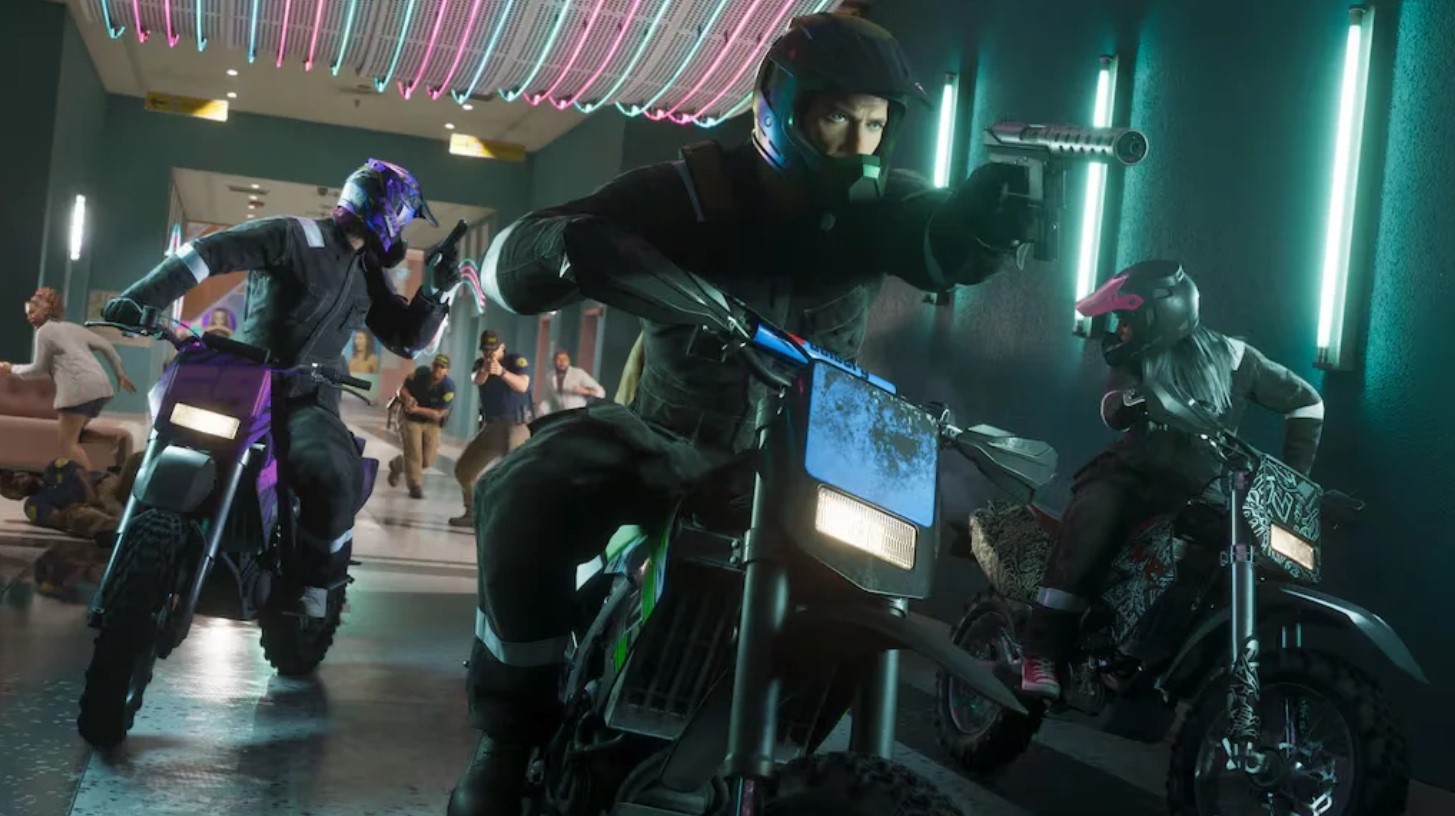
The six-star Wanted Level returns, and a new Heat system sits alongside it. The difference is identification. Police can now recognise suspects by appearance and by location, rather than simply knowing that a crime happened and sending units toward a dot.
Which means evasion becomes a set of deliberate actions rather than a waiting game:
- Change your clothes or your hairstyle to break the description they are working from.
- Abandon the getaway vehicle, because the car is part of your identity to them.
- Separate from your partner, since two people together match the report better than one.
- The “Busted” screen returns for when none of that works.
Compare that with GTA 5, where escaping meant leaving a circle on the minimap and standing still. The circle was a timer. Heat is a description, and descriptions have to be changed rather than outlasted.
The GTA 6 Biggest Changes to Getting Away
The knock-on effects reach into how robberies themselves are structured.
Robberies can be approached quietly or aggressively, and the level of escalation directly shapes the police response you get afterwards. A silent job and a loud one do not produce the same chase, which makes the choice at the start of a heist a bet on how good your exit plan is.
Available cash can affect some missions. Money is not only a score any more; it is occasionally an input.
And large and small decisions affect how the story develops, which Rockstar has said it hopes will encourage replays. That is the same logic as Heat applied to narrative – the game retaining your conduct rather than resetting between missions.
The Sky Remembers the Storm
The weather system was rebuilt on technology from Red Dead Redemption 2, and the defining property is that it is localised and persistent.
Heavy rain can be falling in one area while a nearby area stays sunny. That sentence sounds small and is a structural change. In GTA 5, weather was a global state – it was raining in the game, not raining in a place. Making it regional means the sky becomes a piece of information about where you are.
What follows from it:
- Rain leaves puddles and wet surfaces rather than switching off with the clouds.
- Rainbows appear under the right conditions.
- A dynamic cloud system runs from clear skies up to towering storm formations.
- Wind is shaped by the environment – offshore breezes, convectional updrafts, and buildings that block or redirect it.
- Hair, debris, water and vegetation all react to that wind.
- Tropical storms and hurricanes are confirmed, though Rockstar has not said how often they occur or whether they interrupt missions.
The wind detail is the one worth pausing on. Wind that is redirected by buildings is not a weather effect; it is a simulation reading the geometry of the city. That is an enormous amount of computation spent on something most players will never consciously notice and will absolutely feel.
Your Clothes Remember Where You’ve Been
A smaller system with a surprisingly wide reach.
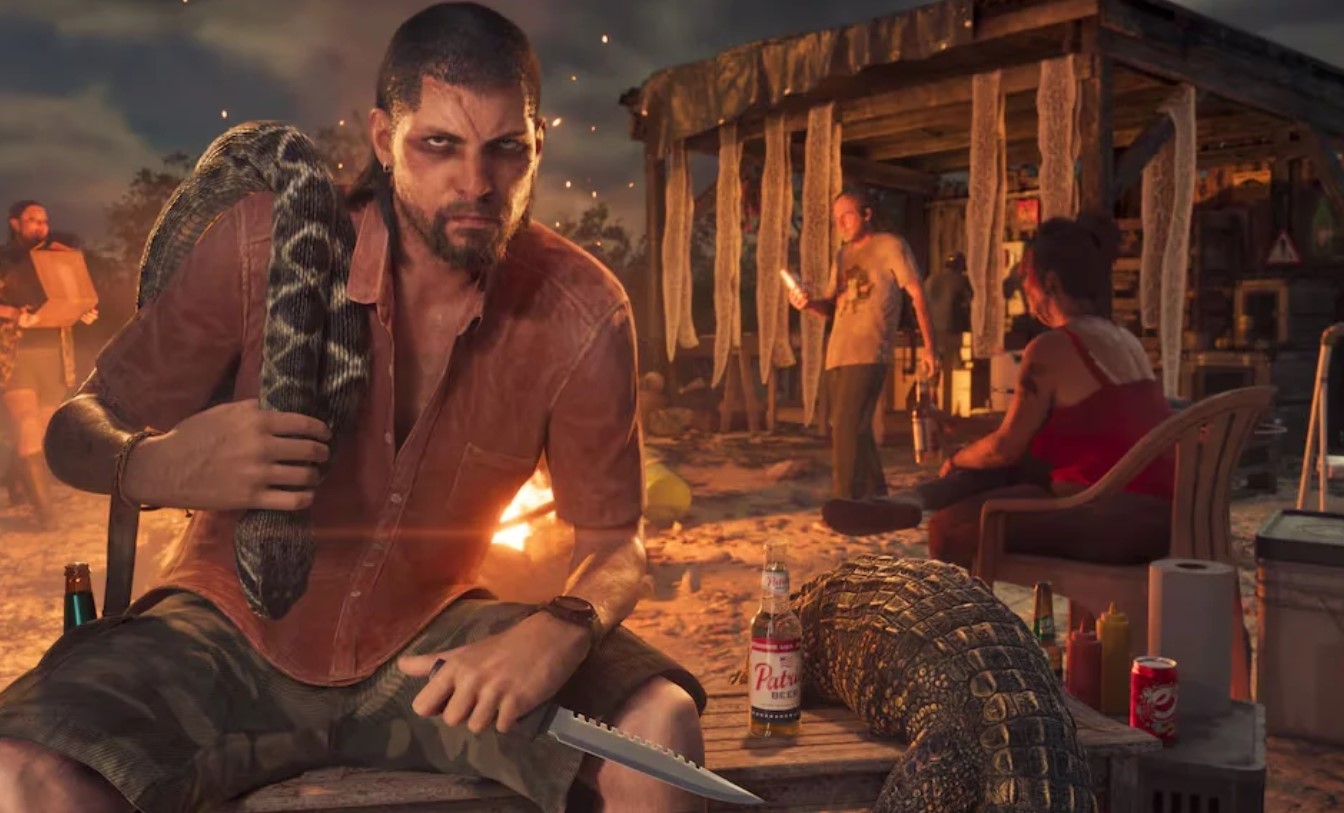
Clothing reflects location, weather, and dirt. Walk through Grassrivers’ wetlands, and you are not the same visual object you were on Vice City’s beachfront.
Which connects directly back to Heat. If police identify you partly by appearance, and appearance is partly a function of where you have been and what the weather did to you, then the two systems are reading the same data. Changing clothes to shake a description is not a menu action bolted on for convenience – it is the counter to a system that was already watching what you look like.
The same logic extends to the crowd. NPCs now vary in body type, skin detail, hairstyle, tattoos, and clothing, and their clothing reflects location, weather, and dirt too. Rockstar reportedly assigned a dedicated team to ambient NPC dialogue on top of that.
The enabler there is technical. Supporting genuinely different body types required solving an animation problem – animations authored for one build break on another, which is why game crowds have historically been one size. Rockstar built real-time retargeting to fix it, and the result is a crowd whose variation is tied to neighbourhood rather than randomised.
The Car Remembers It Was Stolen
Vehicle theft has gone from a verb to a system.
- Some cars need special tools to take.
- Expensive vehicles may carry extra security and trackers.
- The WAiNK app shows a vehicle’s security features, its registration cost, and its estimated resale value.
That last item is the quiet revolution. GTA 5’s cars were interchangeable transport with a radio in them. A car with a logged registration, a resale value, and a tracker is a piece of property with a history, and stealing it is a decision with consequences you can look up in advance.
It also implies an economy. If resale value is a number the game shows you, then selling stolen cars is a considered activity rather than an incidental one.
Your Partner Remembers How You Treated Them
The relationship system is the most interesting and the most easily overstated.
Players can shape whether Jason and Lucia stay friends or become romantic through small interactions, and the relationship affects the story’s development. Teamwork during robberies can strengthen it.
Rockstar has also been clear about what it does not do: the relationship gives no direct gameplay bonus. No damage buff, no shared ammo, no special ability waiting at the end of it. It changes the story and nothing on your stat sheet.
That restraint is worth respecting. Attaching a mechanical reward would turn a relationship into a resource to be farmed, and players would optimise it the way they optimise everything else. Leaving it purely narrative means the only reason to be decent to your partner is that you want to be.
| Region | What It Is |
|---|---|
| Vice City | The rebuilt and expanded city – beaches, art deco, a cruise port, congested roads that could make chases harder |
| Leonida Keys | An island chain |
| Grassrivers | Sprawling wetland with dangerous reptiles |
| Port Gellhorn | Coastal and industrial |
| Ambrosia | Inland |
| Mount Kalaga National Park | The national park |
Outside the city there are swamps, industrial areas, abandoned tourist attractions and rural countryside, plus ATV trails, mud parks, demolition derbies, mountain biking, motocross, golf, farms and ranches. Rockstar reportedly placed more interiors than in any previous GTA, with specific attention to rooftops, alleys and the spaces between locations.
The Wildlife Is the Tell
If you want one piece of evidence for the whole thesis, it is the animals.
More than 170 species, including over 60 bird types, more than 30 land mammals, and a long list of confirmed creatures – alligators, manatees, flamingos, pelicans, sharks, whales, rays, turtles, jellyfish, iguanas, and macaques.
What matters is not the count. It is this:
- Animals are sorted into rare, discoverable, and legendary tiers, with the legendary ones still unidentified.
- Each animal has its own movement behaviour rather than sharing a basic animation set, including sea creatures.
- Some show iridescence, bioluminescence, or translucency.
- Fur and feathers respond to the environment, becoming wet, dirty, matted, or clumped.
Fur that gets wet and stays wet is the same design instinct as clothes that hold dirt and weather that persists in one district. The game is tracking state on things that do not need state tracked. A manatee does not need a memory of having been in the water. Rockstar gave it one anyway, and that tells you what kind of game this is trying to be.
The GTA 6 Biggest Changes That Are Still Unconfirmed
Keeping this honest, because several widely repeated items are not settled.
- Hurricane frequency and mission impact. Confirmed to exist. Nothing said about how often, or whether a storm can interrupt a mission.
- The legendary animals. The tier exists; the creatures in it have not been named.
- How strongly any of these systems affect gameplay. Rockstar has described what the systems are, not how punishing or generous they are.
- Anything about Online. No details.
- The Xbox file size. The 212GB figure is the PS5 one.
- Muscle deformation physics. Coverage discussing it has treated the claim as conditional and unverified.
- Several retailer-listing features, including tracking influencers or finding side quests through the social media feed, remain unconfirmed.
One confirmed social detail worth knowing: RydeMe, a ride-sharing app, provides fast travel, and while riding you can talk to the driver, listen to licensed radio, and browse in-game social media. Jason and Lucia can view posts but cannot create them, which is a deliberate and slightly funny limitation.
The One Thing That Has Not Changed
For all the systemic rebuilding, the launch itself is conventional.
GTA 6 arrives November 19 on PS5 and Xbox Series X|S. The PS5 install is 212GB, and pre-loading opens November 10 – nine days of window, which matters because the physical editions are code-in-a-box, so everybody downloads it regardless of where they bought it.
No PC version has been announced.
FAQ
What is the biggest change in GTA 6?
The Heat system. Police now identify suspects by appearance and location, so escaping means changing clothes or hairstyle, abandoning the getaway vehicle and splitting from your partner, rather than simply outlasting a timer.
How big is the GTA 6 map?
Roughly twice the size of GTA 5’s, across six regions – Vice City, the Leonida Keys, Grassrivers, Port Gellhorn, Ambrosia and Mount Kalaga National Park.
How has weather changed?
It was rebuilt on Red Dead Redemption 2’s technology and is now localised and persistent, so rain can fall in one area while another stays sunny. Wind is shaped by offshore breezes, updrafts and buildings, and hurricanes are confirmed.
Does the Jason and Lucia relationship affect gameplay?
It affects the story’s development and can be strengthened by teamwork during robberies, but Rockstar has confirmed it gives no direct gameplay bonus.
What changed about stealing cars?
Some vehicles need special tools, expensive ones may carry extra security and trackers, and the WAiNK app displays a car’s security features, registration cost, and estimated resale value.
How many animals are in the game?
More than 170 species, sorted into rare, discoverable and legendary tiers, each with its own movement behaviour, with fur and feathers that get wet, dirty or matted.
When does GTA 6 release?
November 19, 2026 on PS5 and Xbox Series X|S, with pre-loading from November 10 and a 212GB install on PS5.
A Game That Takes Notes
Every preview cycle for a Rockstar game produces the same list: bigger map, more animals, better weather, improved police. Those are the things that fit in a bullet point, and they make GTA 6 sound like GTA 5 with the numbers turned up. The numbers are not the change. The change is that state persists.
In GTA 5 you could rob a bank, lose the police, and be a stranger again ninety seconds later wearing the same shirt in the same car. In GTA 6 the shirt is evidence, the car is registered, the weather you drove through is still on your clothes, the district remembers what its people look like, and your partner has an opinion about how the job went. None of that is a spectacle feature. All of it is a game that stopped resetting itself between scenes.
Whether that lands as immersion or as friction is the open question, and nobody outside Rockstar can answer it yet. A world that remembers everything is also a world that can hold a grudge, and six-star chases through a city of congested roads may turn out to be exhausting rather than thrilling.
Thirteen days until we find out. Preload on the 10th, keep a change of clothes in the car, and stop assuming the minimap circle will save you.
Planning your first getaway outfit? Share this, bookmark it, and go free up 212GB like your November depends on it – and if creative or commercial collaboration brought you here, the Lizet Manski team is one message away.