
Total War Games Are Two Different Businesses Wearing One Name
Here are two numbers from the same storefront, the same studio and the same afternoon. Total War: Warhammer III: 47,477 players. Total War: Pharaoh Dynasties: 552 players. That is an eighty-six-fold gap between the fantasy branch of this series and its historical branch, and it is not a blip. Pharaoh’s all-time peak is 6,643. Warhammer III’s all-time peak is 166,754, set in February 2022. The fantasy game’s worst day outperforms the historical game’s best one by an order of magnitude.
Everything Creative Assembly has announced in the past year is a response to that gap. So rather than another ranking, this is a look at how the series split in two, what each half is doing about it, and where the two games currently in development fit.
First, the catalogue, because it is bigger than most people remember.
| Era | Titles |
|---|---|
| Foundations | Shogun (2000), Medieval (2002), Rome (2004), Medieval II (2006) |
| Gunpowder | Empire (2009), Napoleon (2010) |
| Modern historical | Shogun 2 (2011), Rome II (2013), Attila (2015) |
| Fantasy | Warhammer (2016), Warhammer II (2017), Warhammer III (2022) |
| Later historical | Three Kingdoms (2019), Pharaoh (2023) |
| Sagas | Thrones of Britannia (2018), Troy (2020) |
| In development | Medieval III, Warhammer 40,000 |
Plus a spin-off shelf most people have forgotten: Spartan: Total Warrior (2005), Viking: Battle for Asgard (2008), Total War Battles: Shogun (2012), the discontinued Battles: Kingdom and Arena, and the long-quiet Elysium. The series had sold over 36 million copies as of April 2021.
How the Fantasy Branch Pulled So Far Ahead
Warhammer arrived in 2016 and did something the series had never attempted – high fantasy, with monsters, flying units and magic grafted onto a formula built for pike blocks.
What made it durable was not the setting. It was Immortal Empires, the model where every faction and legendary lord from across the trilogy shares one enormous map. Buy into the ecosystem at any point and you get access to everything you own on a single campaign layer, with no requirement to start over when a new piece arrives.
That structure turns each purchase into an addition rather than a replacement, which is why a game from 2022 is still holding nearly fifty thousand concurrent players in late 2026. Nothing has superseded it, because the design does not allow for supersession.
The Historical Total War Games Are Somewhere Else Entirely
Pharaoh released in 2023 and struggled. Creative Assembly responded with Dynasties, a substantial free update in July 2024 that expanded the map and added new factions – a genuine attempt at repair rather than a patch.
It worked, briefly. The Dynasties relaunch produced the game’s strongest month, averaging around 2,545 players with a peak of 6,305 in August 2024. Then the decline resumed: a 53.8% drop in September 2024 alone, averages settling between roughly 400 and 650 through 2025 and 2026, a modest recovery to an average of 651 in August 2026, and a 32.48% fall the following month.
The honest reading is that Dynasties rescued Pharaoh’s reputation without rescuing its population. And Pharaoh is not an isolated case – Three Kingdoms in 2019 was well received and did not establish a line of successors, while the two Saga titles, Thrones of Britannia and Troy, were smaller experiments that did not become a franchise.
So the historical side of Total War has spent a decade producing respectable games that do not compound, while the fantasy side built one game that never stops.
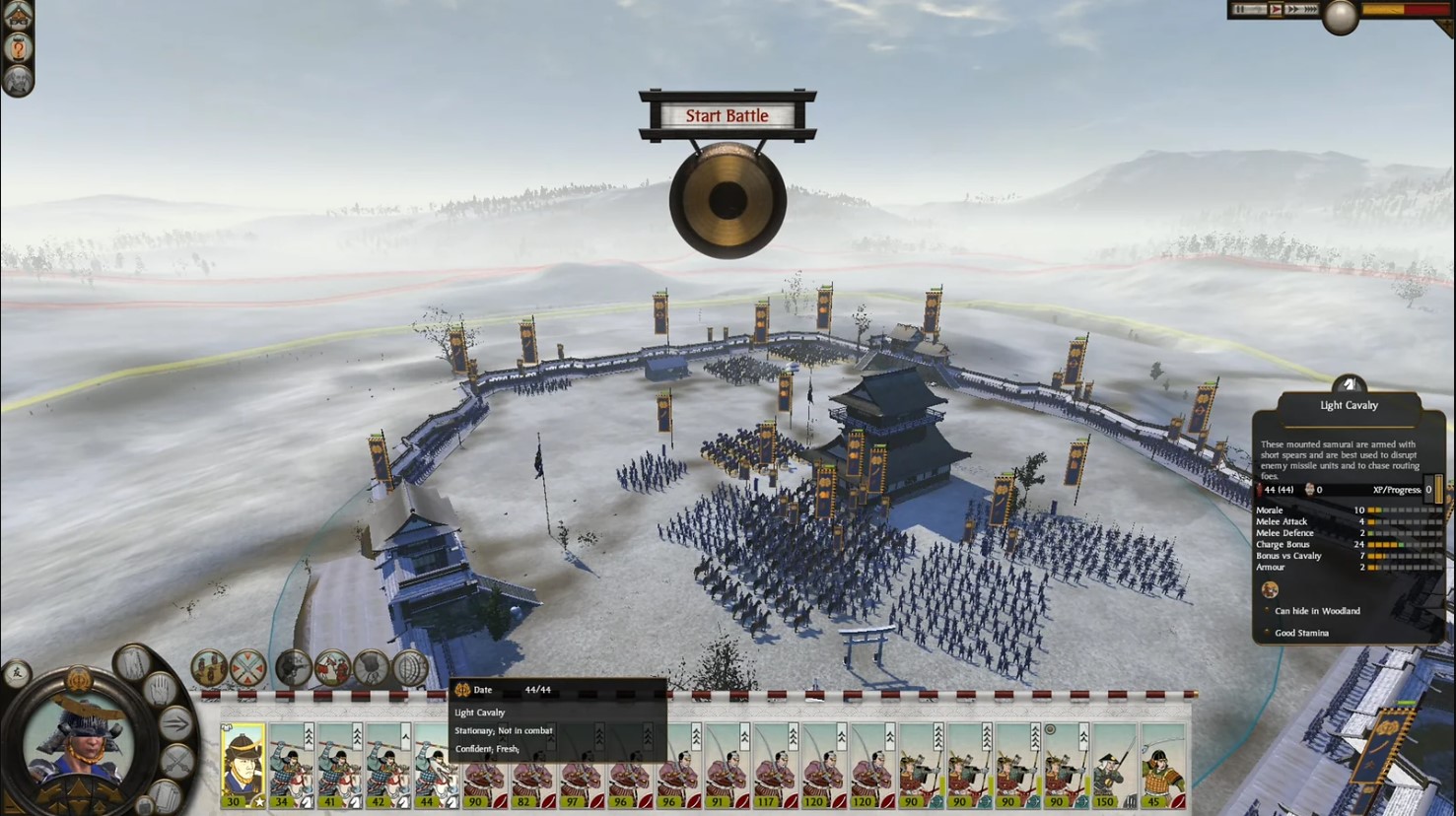
Both Games in Development Are Answers to That Problem
Creative Assembly announced two titles eight days apart in December 2025, and each addresses a different half of the gap.
Total War: Medieval III was announced on 4 December 2025, directed by Leif Walter and Pawel Wojs, as the successor to Medieval II – a game from 2006 that a significant part of the community still treats as the series’ high point.
The detail that matters is not the setting. It is that the game is built on Warcore, a new engine. Historical Total War has been running on iterations of the same technology for years, and the branch’s problems have been as much about aging foundations as about subject matter. A new engine for a historically grounded sandbox is a long-term bet on the historical line rather than a holding action.
Current status is modest and stated plainly: early pre-production, a multi-year development cycle, periodic community updates, and Windows as the listed platform. Nobody should expect this soon.
Total War: Warhammer 40,000 was announced on 12 December 2025 and is due in 2027 – and it carries the single biggest structural change in the series’ history. It will be the first Total War game to release on consoles, arriving on PlayStation 5 and Xbox Series X|S alongside PC.
That is the fantasy branch doing what the fantasy branch does: finding more people rather than making a better game for the same ones.
The Total War Games Model Itself Is Changing
Here is the quote that tells you the most about where the series is heading.
Speaking at Gamescom 2026, Creative Assembly battle product owner Dave Petry described the 40K launch version as the “bedrock” for everything that follows, rather than the first instalment of a trilogy. The plan is “major releases” plus ongoing updates of varying sizes, all building on one game.
His argument was direct: the team wants to extend the Immortal Empires model, and “the true experience is the sandbox” – players should be able to enter from many directions rather than being confined to one slice of the game.
Read that against the Warhammer trilogy and the shift is obvious. Warhammer took three full-price releases across six years to assemble its single map. 40K intends to start with the map and grow it, which means no Warhammer 40,000 II, no restart, no six-year wait for the complete version.
Four factions launch first – Space Marines, Astra Militarum, Aeldari and Orks – with each customisable. Space Wolves are already confirmed as a later addition, Genestealer Cults are under consideration, and Chaos is expected eventually.
What the 40K Preview Actually Showed
A Gamescom build earlier this month gave the clearest look so far, and the campaign structure is a genuine departure. The campaign is set during the Era Indomitus and is organised around a solar system rather than a single landmass. You expand territory, manage resources, upgrade fleets and fight over planets and strategic locations, with battles taking place on individual worlds.
In battle, the new elements are the ones the setting demands:
- Orbital reinforcement for Space Marines, dropping units onto the field mid-fight.
- Orbital bombardments and air strikes as battlefield options rather than cutscenes.
- Destructible environments that change cover and tactical possibilities as a fight progresses.
- Cover and suppression, introduced gradually through the tutorial, which is a different tactical vocabulary from charge timing and flanking.
- Unit specialisation by weapon and trait, plus army colours, iconography and naming.
Previewers reported the strategic layer still feels recognisably Total War – positioning, flanking and managing multiple fronts all survive – while battles put more weight on terrain and matching weapons to targets.
Two honest caveats from that build: the early PC version had frame-rate drops and lighting issues, and only Space Marines were playable, so three of the four launch factions remain unseen in action. The strategic layer was also barely shown, which means planet-hopping, fleet management and resource flow are still largely unknown.
The Series Has Always Moved in Technical Leaps
Worth a short detour, because it explains why a new engine is bigger news than a new setting. Total War’s history is a sequence of structural jumps rather than steady refinement, and each one reset what the series could do:
- Rome: Total War (2004) replaced province-based movement with free movement across the campaign map, and introduced the series’ first 3D map. That single change defined every entry since.
- Empire: Total War (2009) added real-time 3D naval battles, and was the first in the series to ship with Steam handling DRM and achievements.
- Total War: Shogun 2 (2011) pushed its battle engine to support up to 56,000 soldiers in a single battle, a figure that still sounds unreasonable fifteen years later.
- Total War: Warhammer (2016) broke the historical constraint entirely, adding flying units, monsters and magic to a formula built around disciplined infantry lines.
Set against that list, Warcore is the most interesting thing about Medieval III. The historical branch’s problems have never been conceptual – Three Kingdoms and Shogun 2 are both excellent – so much as the compounding cost of building new games on old foundations. Announcing a successor to the most fondly remembered entry in the catalogue, on new technology, is the studio treating the historical line as worth re-engineering rather than winding down.
It is also a reminder of how long these cycles run. Rome to Empire was five years. Empire to Warhammer was seven. A game described as being in early pre-production in late 2025, with a multi-year schedule, belongs to the back half of this decade.
One last piece of context that surprises people: Creative Assembly has outlasted three publishers. Electronic Arts published the first two years, Activision handled 2002 to 2004, and Sega has published everything since 2005. Twenty-six years, sixteen main entries, three owners, and the formula is still recognisably the one from Shogun in 2000.
Where to Actually Start Today
Practical, since the catalogue spans twenty-six years and the answer depends on what you want.
| If You Want | Play | Why |
|---|---|---|
| The most alive game | Warhammer III | Around 47,500 concurrent players and an enormous shared map |
| Historical warfare at its most refined | Shogun 2 | Widely held as the cleanest historical entry, with a battle engine supporting up to 56,000 soldiers |
| The classic everyone still cites | Medieval II | The 2006 game Medieval III exists to follow |
| Characters over army lists | Three Kingdoms | The most narratively distinct historical entry |
| Naval battles | Empire | The first with real-time 3D naval combat |
| Something current and quiet | Pharaoh Dynasties | Substantially improved by its free 2024 update, if a small population does not bother you |
The one piece of advice worth giving above any individual recommendation: the fantasy and historical branches play differently enough that liking one predicts very little about the other. Warhammer’s monsters, magic and flying units change how battles resolve. A player who bounced off Rome II may love Warhammer III, and vice versa.
FAQ
How many Total War games are there?
Sixteen main-series entries counting the two in development, plus two Saga titles and a handful of spin-offs including Spartan: Total Warrior, Viking: Battle for Asgard and several discontinued free-to-play projects.
What is the most played Total War game right now?
Total War: Warhammer III, with around 47,500 concurrent players against an all-time peak of 166,754 set in February 2022.
Is Total War: Medieval III confirmed?
Yes, announced on 4 December 2025, built on the new Warcore engine for Windows. It is in early pre-production with a multi-year development cycle and no date.
When is Total War: Warhammer 40,000 out?
2027, on PC, PlayStation 5 and Xbox Series X|S – the first Total War game to launch on consoles.
Which factions are in Warhammer 40,000 at launch?
Space Marines, Astra Militarum, Aeldari and Orks, all customisable, with Space Wolves confirmed for later and Chaos expected eventually.
Will there be a Warhammer 40,000 sequel?
Creative Assembly has said no. The launch version is intended as the bedrock for major releases and ongoing updates rather than the start of a trilogy.
Is Total War: Pharaoh worth playing now?
It was significantly improved by the free Dynasties update in July 2024, which expanded the map and added factions, though its player population sits in the hundreds rather than the thousands.
One Studio, Two Strategies, Both Visible
What makes this moment worth writing about is that Creative Assembly’s plan is unusually legible. The fantasy branch is going wider. 40K takes the Immortal Empires idea, puts it on consoles for the first time in the series’ history, and commits to growing one sandbox indefinitely rather than selling the same map back to players across three releases. That is a studio that looked at a 2022 game holding fifty thousand players and concluded the model, not the setting, is the asset.
The historical branch is going deeper. Medieval III is a new engine, a multi-year schedule, and the most beloved name in the back catalogue – an attempt to rebuild the foundations rather than ship another well-reviewed game that empties out in six months.
Both bets make sense. Neither is guaranteed. And in the meantime there are twenty-six years of games available, most of them cheap, several of them still excellent.
The gap between 47,477 and 552 is the most honest summary of where this series stands. The two games in development are Creative Assembly’s attempt to make that sentence untrue by 2028.
Planning a campaign this weekend? Share this, bookmark it, and remember you said “one more turn” four hours ago – and if creative or commercial collaboration brought you here, the Lizet Manski team is one message away.