
Type 99 Machine Gun in Video Games and Its Distinctive Silhouette
Every WWII shooter fan knows the shapes. The stick-mag chatter of a Thompson. The blocky menace of an MG42. And, if you’ve spent time on the Pacific maps, that unmistakable top-mounted curved magazine of a Japanese light machine gun poking up over the sights. That’s the Type 99, and it’s one of the more characterful automatic weapons in the whole WWII gaming canon. It’s a gun that looks familiar yet plays completely differently from its Western cousins.
Here’s the thing though – a lot of players grab the Type 99 in a game, empty the magazine in three seconds, and wonder why it feels underwhelming compared to a belt-fed monster. That’s because they’re playing it wrong. The Type 99 rewards a specific, deliberate style, and once it clicks, plenty of players swear it’s the best LMG in the game. Understanding both its real history and its in-game quirks is the key.
So let me walk you through everything about the Type 99 machine gun in video games – its real-world roots, the titles it appears in, how it actually plays, and why it inspires such loyalty among Pacific-theater fans. Set up your bipod. Let’s dig in.
What Is the Type 99 Machine Gun?
Let’s start with the real weapon, because the games generally model it faithfully and the history explains its distinctive design. The Type 99 light machine gun was a light machine gun used by the Imperial Japanese Army in World War II, designed by Kijiro Nambu and produced until the war’s end.
It evolved directly from an earlier weapon. The Type 99 was a modified, re-chambered version of the Type 96 LMG, redesigned to fire the more powerful 7.7×58mm Arisaka cartridge instead of the older 6.5mm round. That change improved the weapon’s energy by over 50%, giving it more stopping power and better penetration, while other tweaks like omitting the oiling mechanism made it more reliable overall.
Here are the defining features that carry over into games:
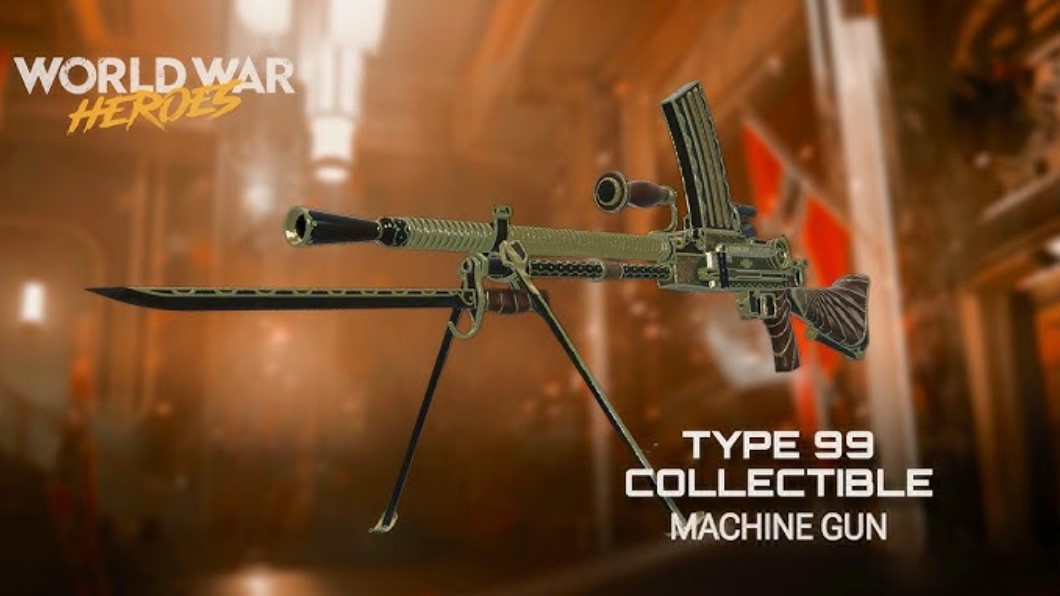
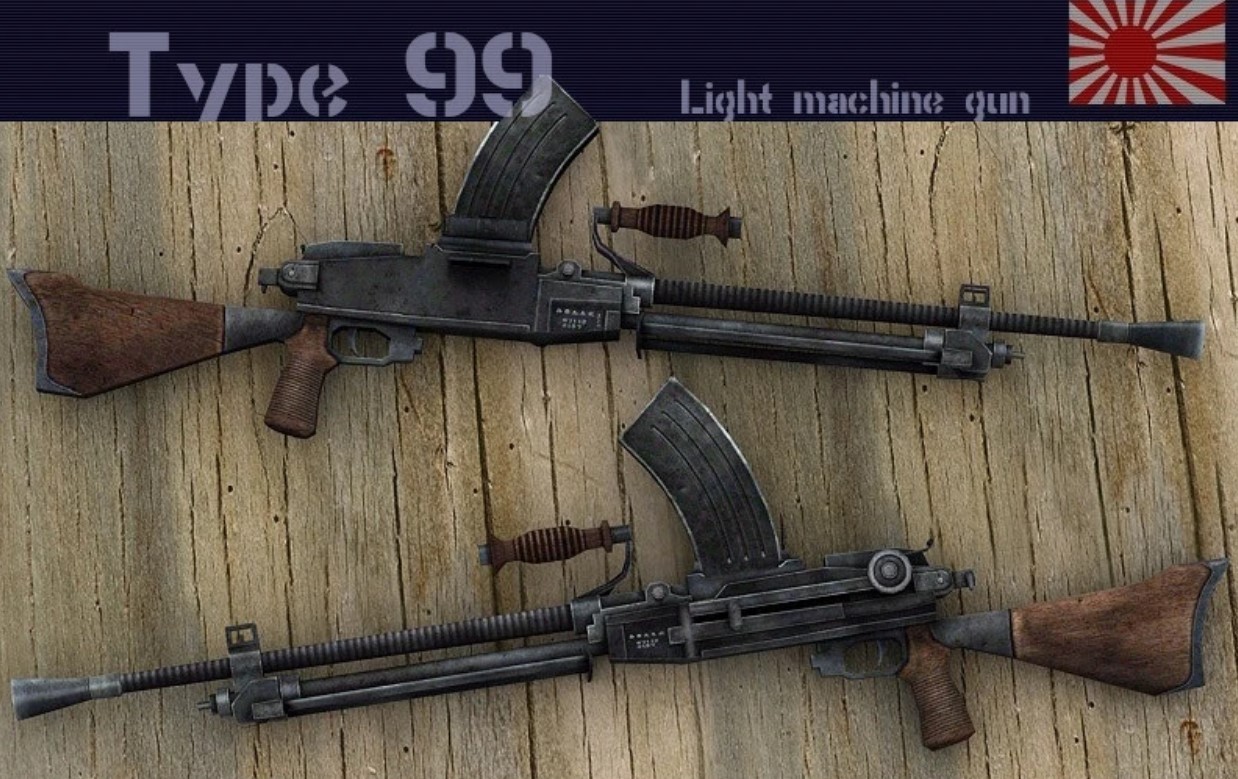
- Top-mounted curved box magazine – a distinctive 30-round detachable mag with a round counter, sitting on top of the gun.
- Quick-change finned barrel – the barrel could be swapped rapidly to avoid overheating.
- Bipod-mounted by default – built for supported, prone or braced fire.
- Optional 2.5x scope – a telescopic sight could mount on the right side, letting it double as a marksman’s weapon.
- Bayonet lug – yes, this LMG could mount a bayonet.
That Bren gun resemblance is the thing everyone notices. Like the Type 96, the Type 99 traces its lineage to the Czech ZB vz. 26, the same design that inspired the British Bren gun. So the two guns share a strong external resemblance – the top magazine, the general profile – despite quite different internal mechanics. This has led to a persistent gaming-community myth that the Japanese simply copied captured Brens, which isn’t accurate; they’re cousins from a shared ancestor, not copies.
Historians consider the Nambu LMGs among the best light machine guns any nation fielded in WWII – light, handy, accurate, and reliable.
The Type 99 Machine Gun in Video Games: Where It Appears
Now for the fun part – where can you actually wield this thing? The Type 99 has become a staple of WWII and Pacific-theater shooters, showing up across a range of beloved titles. Let me run through its notable appearances.
The Type 99 has featured in numerous games over the years, each modeling it with that signature top-fed silhouette.
Here are the standout titles:
- Battlefield V – appears in the War in the Pacific chapter alongside its Arisaka rifle cousins.
- Red Orchestra 2: Rising Storm – issued to Japanese Machine Gunners, with bipod, optional bayonet, and 2.5x scope.
- Enlisted – available in the Pacific Campaign for the Japanese Army, unlocked at Tier 3.
- Battlefield 1942 and Battlefield Vietnam (WWII mod) – early franchise appearances for the Japanese factions.
- Various other WWII shooters – it’s a recurring pick wherever the Pacific theater is represented.
Rising Storm is arguably where the Type 99 shines brightest and feels most authentic. There, it’s the Japanese Machine Gunner’s tool, coming equipped with a bipod by default and upgradeable with a bayonet and that 2.5x scope. The scope detail is significant – at higher levels, unlocking the optic essentially turns the Type 99 into a shoulder-fired automatic marksman weapon, which is both historically grounded (the real scoped versions were issued to unit marksmen) and genuinely powerful in-game.
In Enlisted, it slots into the Pacific Campaign tech tree at Tier 3 alongside the Machine Gunner II squad, and it even comes pre-equipped with a Type 30 bayonet. And across the Battlefield series, from the old 1942 days through to Battlefield V’s Pacific content, the Type 99 has been a recurring representative of Japanese automatic firepower.
Wherever developers recreate the island-hopping campaigns of the Pacific, the Type 99 tends to make an appearance.
How the Type 99 Machine Gun Plays In-Game
Here’s where understanding the weapon really pays off, because the Type 99 plays quite differently from Western LMGs, and that trips up newcomers constantly. Let me break down its in-game character.
The single biggest factor is the magazine. Unlike belt-fed guns such as the American M1919 or the MG42’s massive drums and belts, the Type 99 typically carries a 30-round top-mounted box magazine. That’s a relatively small capacity for a support weapon, which fundamentally shapes how you must play it. You can’t just hold the trigger and hose down a lane for ten seconds – you’ll run dry fast and get caught reloading.
Here’s how these traits translate to gameplay:
- Smaller magazine – around 30 rounds, demanding controlled bursts over sustained spray.
- Setup dependency – many games require you to deploy the bipod for best accuracy, limiting run-and-gun.
- High per-shot power – the 7.7mm round hits hard, often ripping through enemies efficiently.
- Strong accuracy when braced – deadly from prone or supported positions.
- Scope potential – in games like Rising Storm, the optic makes it a long-range threat.
The community has a lot to say about this, and the sentiment is genuinely divided but fascinating. Some players initially complain the Japanese LMGs “suck,” feeling like an upgraded BAR that can’t be operated without setting it up. But experienced players push back hard. As one Rising Storm veteran put it, they actually prefer the Type 99 LMG over the American M1919 because “it rips right through the enemy.”
Another said the Japanese machine guns might be their favorite LMG in the game – you just can’t run and gun with them, but used correctly they pay off immense dividends.
That’s the crux of it. The Type 99 is a positioning weapon. Set up in a good spot, brace it, fire disciplined bursts, and reposition before the enemy flanks you. Players who adapt to that rhythm find it devastating; players who treat it like a run-and-gun spray weapon find it frustrating. The small magazine, as one player noted, takes time to get used to, but eventually you’ll love it.
The Reload Quirk and Historical Accuracy
Here’s a detail that WWII gun enthusiasts genuinely appreciate, and it speaks to how carefully some games model the Type 99. The reload and feeding mechanics reflect the real weapon’s quirks, for better or worse.
In some titles, the developers have gone to interesting lengths to represent the top-mounted magazine’s behavior. There’s been community discussion about how games like Battlefield V handle the Japanese LMG feeding systems, with animators sometimes treating the magazine or hopper in unusual ways to match the real mechanism. These are the kinds of authenticity details that hardcore milsim fans notice and debate at length.
A few historically-grounded traits that show up in-game:
- Top magazine visibility – the mag sits in your sight line, a real characteristic of the design.
- Barrel changing – some games like Rising Storm animate the quick-change barrel to manage overheating.
- Bayonet mounting – reflecting the real weapon’s bayonet lug, unusual for an LMG.
- Round counter – the real mag had a counter, a neat detail of the design.
That community knowledge runs deep. Players in forums frequently discuss the real-world faults and advantages of these weapons, noting how the game versions echo reality. The Nambu LMGs’ reputation for reliability, their Bren-like handling, and their accuracy all inform how the guns feel in a well-made WWII shooter. When a game gets the Type 99’s character right – powerful, accurate, magazine-limited, best when braced – it’s honoring a genuinely respected piece of military history.
It’s worth clearing up one more myth here, since it circulates in gaming communities: the Type 99 was not a copied Bren gun that the Japanese reverse-engineered from POWs. That’s a persistent piece of misinformation. Both guns descend from the same Czech ZB vz. 26 design, which is why they look alike. The Type 99’s mechanical operation is quite distinct from the Bren’s. Knowing this makes you the smartest person in the lobby chat.
Tips for Using the Type 99 Machine Gun
Let me leave you with practical advice for wielding the Type 99 effectively, because as we’ve established, it’s a weapon that rewards the right approach. These tips draw on community wisdom from players who’ve mastered it.
First and most important: play it as a support weapon, not an assault rifle. The Type 99 thrives from prepared positions. Find good cover or a commanding angle, deploy your bipod if the game allows, and let enemies come to you. Trying to charge around with it hip-firing is the fastest route to frustration. Patience and positioning are everything.
Here are more tips for the Type 99:
- Fire controlled bursts – the ~30-round magazine punishes spray-and-pray, so tap in short bursts.
- Reposition after engaging – once you’ve revealed your spot, move before enemies flank or grenade you.
- Use the bipod and prone – accuracy and recoil control improve dramatically when braced.
- Unlock the scope where available – in games like Rising Storm, the optic transforms it into a long-range threat.
- Watch your reload timing – reload during lulls, never mid-firefight with enemies bearing down.
That reposition point is crucial. As one player memorably complained about the stationary and set-up machine guns, the danger is that you “shoot a couple of people, expose yourself, and get killed while reloading.” The counter to that is movement – hit your targets, then relocate before the enemy pins you down. Treat every engagement as shoot-and-scoot rather than a last stand.
And finally, embrace the weapon’s identity. The Type 99 isn’t trying to be a belt-fed suppression monster – it’s a precise, hard-hitting, magazine-fed support gun with marksman potential. Once you stop fighting its nature and start playing to its strengths, it becomes one of the most satisfying LMGs in any WWII shooter. Plenty of veterans genuinely prefer it to the Allied alternatives, and after some practice, you might too.
FAQ
What is the Type 99 machine gun in video games?
It’s a Japanese WWII light machine gun featured in many shooters, recognizable by its top-mounted curved magazine and Bren-like profile, firing the 7.7mm Arisaka round.
Which games feature the Type 99?
Battlefield V, Red Orchestra 2: Rising Storm, Enlisted, Battlefield 1942, and various other WWII and Pacific-theater shooters include the Type 99.
Is the Type 99 a copied Bren gun?
No, that’s a myth. Both the Type 99 and the Bren descend from the Czech ZB vz. 26 design, which is why they look similar, but their mechanics differ.
Why does the Type 99 feel weak in games?
It has a small ~30-round magazine and often needs its bipod deployed, so it punishes run-and-gun play. Used from set positions with burst fire, it’s very strong.
What makes the Type 99 unique in games?
Its top-mounted magazine sits in your sightline, it hits hard with the 7.7mm round, and in some games it can mount a scope, turning it into an automatic marksman weapon.
How do I play the Type 99 well?
Treat it as a support weapon: use cover, deploy the bipod, fire controlled bursts, and reposition after engaging so you’re not caught reloading.
Can the Type 99 use a scope?
Yes, in games like Rising Storm, unlocking the 2.5x scope reflects the real weapon’s optional optic and makes it a potent long-range threat.
Wrapping It Up
So there’s your complete guide to the Type 99 machine gun in video games. This distinctive Japanese light machine gun – with its top-mounted curved magazine, hard-hitting 7.7mm round, and Bren-like silhouette – has become a beloved fixture of WWII shooters from Battlefield to Rising Storm to Enlisted. It’s a weapon steeped in real history, and the best games honor that with faithful, characterful representations.
My honest advice? Respect what the Type 99 is. It’s not a belt-fed spray weapon – it’s a precise, powerful, magazine-limited support gun that rewards positioning, controlled bursts, and smart repositioning. Deploy the bipod, unlock the scope where you can, and play the shoot-and-scoot game. Do that, and you’ll understand why so many Pacific-theater veterans rate it as their favorite LMG despite its quirks.
The Type 99 proves that the most rewarding weapons aren’t always the easiest ones. Learn its rhythm, lean into its strengths, and that top-fed chatter will become the sound of your enemies’ undoing. Now set up your position and hold that line, gunner. The Pacific awaits.
P.S. Here’s your fresh 30-round magazine of thanks: if this guide put a few well-aimed bursts through the confusion, send it downrange across your social feeds so fellow gunners can master their positioning too, and pin it to your bookmarks like a good defensive spot you’ll want to fall back to before your next Pacific push. Every share is basically a bipod deploy that steadies our team’s aim toward more great guides. And if you’re seeking creative or commercial collaboration, the Lizet Manski team is one message away – reach out directly and let’s hit the target together.