
Xbox Nano Controller: What Microsoft Confirmed, and What It Quietly Didn’t
Pre-orders opened four days ago. The thing ships on November 4. And the official announcement, while cheerful, left out roughly half the specification sheet a careful buyer would want. That is not unusual for a controller launch. What makes it worth writing about is that the missing half is the half that decides whether $49.99 is a good price or a bad one – thumbstick technology, rumble, battery life, cloud latency behaviour. None of those appear in the material published so far, and you are being asked to commit money before November.
So this is a risk register rather than a hands-on. First, the confirmed picture, which is genuinely appealing. Then five unknowns, ranked by how much each one would change the decision, with what to watch for in each case.
| Confirmed | Detail |
|---|---|
| Announced | October 14, 2026 |
| Ships | November 4, 2026, in select markets, more to follow |
| Price | $49.99, with UK pricing listed inconsistently at £44.99 and £49.99 |
| Length | Just over 5 inches – shorter than most current phones |
| Weight | 3.5 ounces, battery included |
| Inputs | All 18 standard gameplay inputs, familiar layout |
| Extra | One reprogrammable Action Button, for captures and similar |
| Connectivity | Xbox Wireless plus Bluetooth |
| Power | Internal rechargeable battery, charged over USB-C, cable not supplied |
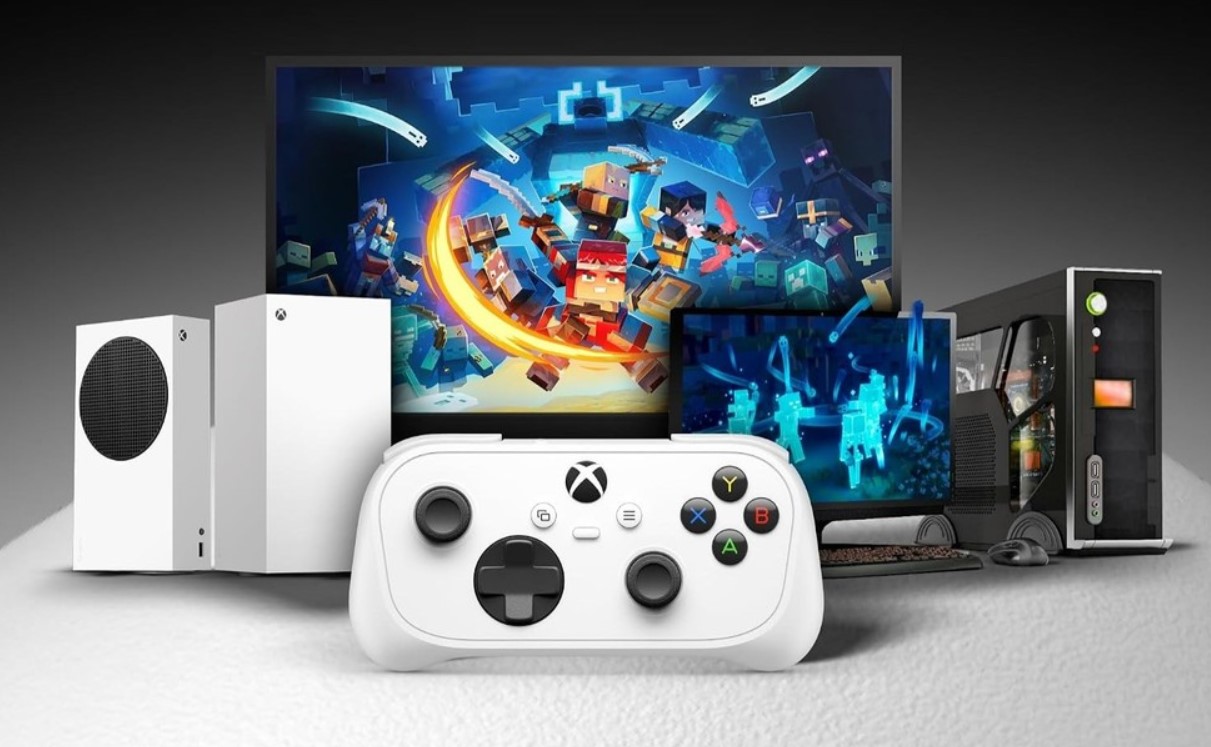
| Compatibility | Xbox Series, Xbox One, Windows PC, iOS, Android, select smart TVs |
That is a real controller, not a toy. Eighteen inputs means nothing has been removed from the layout – no missing bumper, no merged buttons, no stripped D-pad.
The Confirmed Picture Is Better Than “Small Controller” Suggests
Microsoft’s framing is “portable, pocketable, capable,” and it is pitching this at younger players, smaller hands, local co-op for families, and taking something like Forza Horizon 6 out of the living room.
The dimensions are the part worth sitting with. Just over five inches long and three and a half ounces puts this below the footprint of most modern phones, in a shape several outlets immediately compared to an SNES pad or a TV remote. Microsoft calls it its smallest controller to date and describes it as literally pocketable, which for once appears to be accurate rather than marketing.
Three details that are easy to skim past and shouldn’t be:
- The extra Action Button is reprogrammable, which is a feature normally reserved for pricier pads, and it covers things like screenshots and capture.
- Compatibility is broad. Xbox consoles, Windows, iOS, Android and select smart TVs is a wider net than the standard controller’s typical pitch, and it signals that cloud and mobile play are the intended home.
- It carries both Xbox Wireless and Bluetooth, so it is not a Bluetooth-only budget accessory.
There is also a bundle angle in the United States, where buyers of select Samsung TVs over the holidays and Meta Quest purchasers can get two months of Game Pass Ultimate, limited to new members.
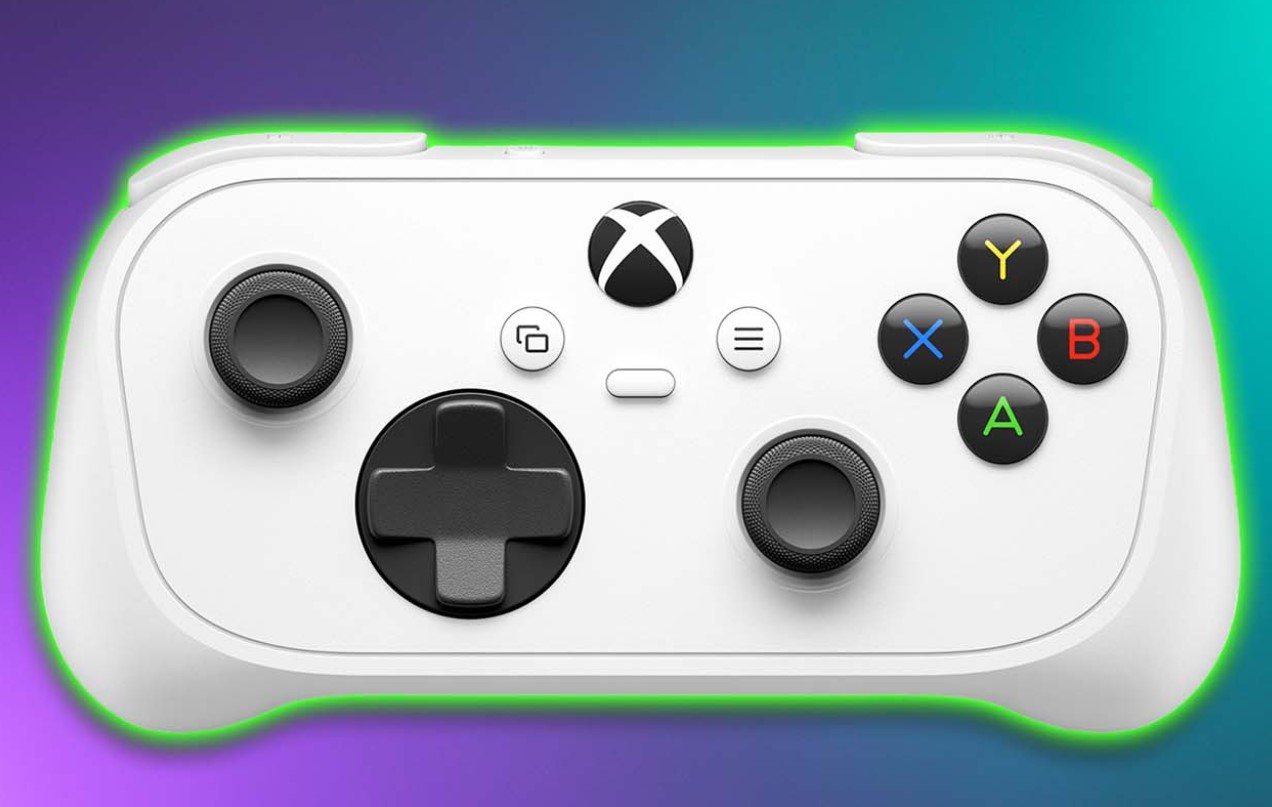
At $49.99 against a standard Xbox Wireless Controller’s usual asking price, the Nano is positioned as the cheaper, smaller sibling rather than a compromise. Whether that holds depends entirely on the next five sections.
Risk One: The Thumbsticks Are Not the Good Ones
Decision impact: high. This is the one that would stop me pre-ordering. Reporting on the announcement has noted that the Nano does not carry the premium magnetic thumbstick technology – neither Hall Effect nor TMR – that higher-end pads have adopted specifically to resist drift.
Why that matters more here than it would elsewhere:
- Stick drift is the single most common failure mode for modern controllers, and it is the reason magnetic sticks became a selling point in the first place.
- Smaller components generally mean tighter tolerances, and a five-inch body gives the engineering less room than a full-size shell.
- The target audience is children and travel, which is to say the two environments hardest on hardware.
- Community response picked up on this immediately, with drift concerns among the first reactions in comment threads.
What to watch for: independent teardowns and the first three months of user reports. Potentiometer sticks are not doomed – the overwhelming majority of controllers ever made have them – but a $49.99 pad without magnetic sticks is making a value argument that depends on it lasting.
Xbox Nano Controller Risk Two: Bluetooth Is Not Wi-Fi
Decision impact: high, if cloud gaming is your plan. Microsoft is positioning this partly around Xbox Cloud Gaming and casual play. That is the obvious fit for a pocketable pad paired to a phone or a smart TV.
But reporting on the announcement has flagged that the Nano has no direct Wi-Fi connection for cloud gaming, relying on Xbox Wireless and Bluetooth instead – and the expectation is that this will be less responsive than a direct link would be.
Latency on a cloud session is already the hardest part of the experience. Adding a Bluetooth hop between your thumbs and the stream is not fatal, but it is additive, and it lands on top of a connection that is already the weak point.
Practical reading:
- On a console or PC over Xbox Wireless, this should behave like any other Xbox controller.
- On a phone or tablet over Bluetooth for cloud play, expect the pairing to contribute some latency on top of the stream.
- For slower games this is irrelevant. For anything requiring precise timing over cloud, it is a real consideration.
- Nobody has measured it yet, so this remains a reasonable expectation rather than a tested result.
Risk Three: Nobody Has Mentioned Rumble
Decision impact: medium, and oddly large for a small detail.
Across the announcement coverage I have read, haptics and rumble simply are not addressed. Not confirmed, not denied, not listed in the feature bullets alongside the 18 inputs and the Action Button.
That silence is notable because rumble is standard on every Xbox controller, including the cheapest ones, and because vibration motors are among the first things removed when a design is fighting for weight and space. Three and a half ounces is extremely light for a pad with a battery in it.
I want to be careful here: absence from a press release is not absence from a product. Launch announcements routinely omit standard features. But if rumble were present and the pad were this small, that would be a bullet point worth including, and it was not included.
The same silence covers a headphone jack and a dedicated share button, both of which remain unlisted either way.
Risk Four: No Battery Figure, and No Cable in the Box
Decision impact: medium, with one small annoyance attached. The battery is internal and rechargeable over USB-C. No battery life figure has been published, which for a controller aimed at travel and cloud play is the specification I would most want before buying.
Separately and confirmed: there is no USB-C cable included. You supply your own.
That is a defensible choice in 2026 – most households have a drawer full of them, and leaving it out reduces waste and cost. It is also a small friction for the exact buyer this is aimed at, namely a parent buying a controller for a child who does not necessarily own a spare cable.
One more thing worth noting for accuracy’s sake: coverage of the announcement has described the battery inconsistently, with most sources saying internal and rechargeable while at least one described it as replaceable. The weight of reporting favours internal and rechargeable, charged over USB-C, but it is an unresolved detail rather than a settled one.
Risk Five: Five Inches Is a Commitment
Decision impact: high, and entirely personal. Everything good about this controller and everything risky about it come from the same measurement.
Just over five inches long is excellent for a pocket, a backpack, a child’s hands, or a bedside drawer. It is considerably less obviously excellent for an adult with large hands playing a four-hour session.
The community response has split cleanly along this line. People buying for children, for travel, or for cloud streaming on a small laptop are enthusiastic. People who have settled on the ergonomics of the Xbox One pad, the Elite Series 2 or the Switch 2 Pro Controller are sceptical, and a recurring note is that the shape looks more like an SNES controller than a modern grip.
Both reactions are correct, because they are describing different hands. What nobody can tell you from an announcement is how it feels after an hour, which is the only question that matters here.
| Risk | Impact | What to Watch For |
|---|---|---|
| No Hall Effect or TMR sticks | High | Teardowns, and user drift reports in the first three months |
| Bluetooth rather than direct Wi-Fi | High for cloud players | Measured latency comparisons against a standard pad |
| Rumble unconfirmed | Medium | The official product page’s final spec list |
| No published battery life | Medium | Reviews that actually run it down |
| Five-inch body | High and personal | Hands-on impressions from someone with hands like yours |
The Case For Pre-Ordering Anyway
Having spent five sections on risk, here is the honest other side, because the product is well-judged for a real need.
Full-size controllers are genuinely difficult for children and for adults with smaller hands, and the accessibility angle is not a marketing flourish – it is the most practical reason this exists. A pad with all 18 inputs in a smaller shell is not a stripped-down device, it is the same device scaled, and scaling without removing functions is harder than it sounds.
The cross-platform compatibility is the second strong argument. One controller that works on an Xbox, a PC, a phone, a tablet and some smart TVs is a travel accessory with genuine utility, and the pocketability means it actually gets packed rather than left at home.
And $49.99 is positioned carefully. It is below the standard pad, cheap enough to be a second controller for guests, and in the price band where a family buys two.
Who the Xbox Nano Controller Is Actually For?
Short and direct, since this is a purchase decision rather than a debate.
- Buy it for a child. Smaller hands, full input layout, light enough not to fatigue, cheap enough that a drop is not a disaster.
- Buy it for travel. It fits in a coat pocket, pairs to a phone, and works with cloud gaming and smart TVs in hotels.
- Buy it as a spare for guests, where local co-op matters more than the last five percent of precision.
- Wait if you have large hands, until somebody with large hands has written about it.
- Wait if you play competitively, since no magnetic sticks and an added Bluetooth hop are both working against precision.
- Wait if cloud play is the whole reason, until somebody measures the latency properly.
The honest summary of the whole situation is that this is a very good idea at a sensible price with an incomplete specification sheet, available for pre-order two and a half weeks before anyone can test it.
FAQ
How much is the Xbox Nano Controller?
$49.99. UK pricing has appeared inconsistently in coverage at both £44.99 and £49.99, so check the store listing in your region.
When does it come out?
November 4, 2026, shipping in select markets first with more to follow. Pre-orders are already open.
How big is it?
Just over 5 inches long and 3.5 ounces including the battery, which makes it shorter than most current smartphones and Microsoft’s smallest controller.
Does it have all the normal buttons?
Yes. All 18 standard gameplay inputs in a familiar layout, plus one extra reprogrammable Action Button for captures and similar.
What does it work with?
Xbox Series and Xbox One consoles, Windows PC, iOS, Android and select smart TVs, over Xbox Wireless and Bluetooth.
Does it have anti-drift thumbsticks?
No. Reporting on the announcement states it does not carry the premium magnetic thumbstick technology – Hall Effect or TMR – found on some higher-end pads.
Is a charging cable included?
No. The battery is internal and rechargeable over USB-C, and you supply the cable.
A Good Idea With Half a Spec Sheet
What Microsoft has made here is the controller a lot of households have been improvising around for years, usually by handing a child a full-size pad they cannot comfortably hold.
Five inches, three and a half ounces, every button present, fifty dollars, works on nearly everything. As a product concept it is close to unimprovable, and the accessibility case for it is stronger than the marketing is bothering to make.
What it does not yet have is a published answer on thumbstick technology beyond “not the premium kind,” on rumble, on battery life, or on how it behaves on a cloud session over Bluetooth. Four unknowns, all of which land squarely on whether $49.99 is well spent.
The pre-order is open and the ship date is November 4, which means you can either commit now or wait roughly a fortnight and read somebody’s measurements. Given that nothing about this is likely to sell out, waiting costs you almost nothing and buys you an actual spec sheet.
Small controller, small wait. Both seem proportionate.
If this stopped you pre-ordering a controller whose thumbstick technology nobody has published yet, pass it along on X, Reddit or whichever group chat is already arguing about whether it looks like an SNES pad – small writing teams travel by word of mouth and nothing else. Bookmark it too, since rumble, battery life, and the drift question will all be answered within weeks of November 4, and we revise this page rather than filing a fresh one. And if creative or commercial collaboration brought you here, write to the Lizet Manski team directly – we fit in your pocket too.